Wednesday, March 30, 2011

jungbook - you don't even have to sign in!

jungbook . . .  No, it's not another one of those online social clubs where you have to befriend family, friends, colleagues, or anyone else for that matter. You don't even have to sign in!

jungbook.com is a new site that features articles, book reviews, and announcements about current and forthcoming Jungian psychology publications that have been written by certified Jungian analysts. One does not need to be a Jungian analyst to contribute a book review to jungbook.com; however, reviews must pertain to books that have been written by certified Jungian analysts.

Perhaps you have a favorite Jungian title that you would like to review and publish on jungbook.com? The title can be from any publisher, for example: Inner City Books, Routledge, Spring Journal, Shambhala, Fisher King Press, Princeton University Press. . . The only stipulation is that the review must be about a book written by a certified Jungian analyst. Articles should be fully edited and ready for publication.

You can also register with jungbook.com to receive email updates when future reviews and articles are posted. Simply enter your email address under the 'Follow By Email' tab on the left side of the jungbook.com front page.

Saturday, March 26, 2011

Jigging in the Deep Blues: News Release

Another Fisher King Press title is on the way:

Deep Blues: Human Soundscapes for the Archetypal Journey

by Mark Winborn

Deep Blues explores the archetypal journey of the human psyche through an examination of the blues as a musical genre. The genesis, history, and thematic patterns of the blues are examined from an archetypal perspective and various analytic theories. Mythological and shamanistic parallels are used to provide a deeper understanding of the role of the bluesman, the blues performance, and the innate healing potential of the blues.  Universal aspects of human experience and transcendence are revealed through the creative medium of the blues. The atmosphere of Deep Blues is enhanced by the black and white photographs of Tom Smith which capture striking blues performances in the Maxwell Street section of Chicago.  Jungian analysts, therapists and psychoanalytic practitioners with an interest in the interaction between creative expression and human experience should find Deep Blues satisfying. Deep Blues should also appeal to enthusiasts of music, ethnomusicology, and the blues.

about the author
Mark Winborn, PhD, NCPsyA is a Jungian Psychoanalyst and Clinical Psychologist. He is a training and supervising analyst of the Inter-Regional Society of Jungian Analysts and is also affiliated with the National Association for the Advancement of Psychoanalysis and the International Association for Analytical Psychology. Dr. Winborn maintains a private practice in Memphis, Tennessee where he is also currently the Training Coordinator for the Memphis Jungian Seminar, a training seminar of the IRSJA.
Fisher King Press publishes an eclectic mix of worthy books including Jungian Psychological Perspectives, Cutting Edge Fiction, and a growing list of alternative titles.
    • We Ship Worldwide.
    • Credit Cards Accepted.
    • Phone Orders Welcomed: +1-831-238-7799 skype: fisher_king_press

    Wednesday, March 23, 2011

    Suspended Animation and The Spirit of Active Imagination

    by Lawrence H. Staples

    Active Imagination - What it is:

    Active imagination is a technique developed by Jung to help amplify, interpret, and integrate the contents of dreams and creative works of art. When approached by way of writing, active imagination is like writing a play. One takes, for example, a figure that has appeared in one's dreams or creative writings. Usually, these figures express a viewpoint quite the opposite of one's normal conscious view. Sometimes it is a male, shadow figure. At other times, it may be a feminine, anima, or maternal figure. One starts to converse with the figure in writing. One challenges the dream figure and lets him/her challenge the dreamer. The dreamer asks the figure why he appeared in the dream. He asks the figure what it wants from him. Then, the ego, like a playwright, puts himself as best he can into the figure's shoes and tries to express it and defend its viewpoint. There ensues an iterative dialogue between the writer and the opposite figure in his dream or piece of writing. With practice one can become accomplished at expressing both viewpoints, just as a playwright does. One gets better at this the more one does it, just as the playwright does. The technique of active imagination tends to detach the qualities and traits that are first seen in a dream or in a story as belonging to external persons, and coming to see them as belonging to one's self. Active imagination, then, helps the writer become conscious of his opposite qualities by forcing him to give voice to figures, like shadow figures, that carry qualities opposite those of his ego. These qualities personify the rejected opposites that are present in the unconscious. This technique helps recover these rejected opposites and make them available to the ego and consciousness without necessarily having to act them out.

    Example of Active Imagination:

    Following is an impressive and rich example of the power of this technique to affect and even shape our lives. It's an active imagination done by a man in his late thirties. He was an extremely successful salesman who was, nevertheless, unhappy with his work and life. Despite his high income, work had lost its meaning for him. He had entered Jungian analysis in order to help him out of his suffocating existence and find a new and different way. He had a powerful dream that he took to his analyst. His analyst suggested he do active imagination with one of the figures in the dream. His is a beautiful example of active imagination that led to much more than a dialogue. It became the seed of a creative life that grew and flourished into a wholly new career. Out of his active imagination came a novel, LeRoi, which was then followed by two other novels, SamSara and Menopause Man. All have been published as the The Chronicles of a Wandering Soul series. He is living today as a successful writer. He has written still more books that are waiting in the wings to be published. His name is Mel Mathews. The power of the active imagination is seen in the fact that it unearthed in him some deep hidden spring of creativity that suddenly gushed forth. Apparently, he had been living a life of suspended animation that lay there until some psychic prince awoke it.

    The Dream:


    Mel's book LeRoi was literally born from a dream and the active imagination he did with the dream. He had the following dream: A woman was sitting in a diner, in a booth smoking. " Excuse me, I wonder if you could put your cigarette out?" I asked. She ignored me. A few minutes later she lit up again. I stood up, walked around to her booth, grabbed her pack of smokes and the ashtray and walked out the front door. I dumped the ashtray and stepped on her lit smoke; then, I dropped her pack and stomped them as well. I walked back inside, slammed the empty ashtray down on the coffee counter and sat down. A petite pony-tailed brunette walked up with the iced tea pitcher to refill my glass. "Can I have some more ice please?" " Sure", she answered, " I'm sure (Flo) the boss-lady will be out in a minute", the brunette said, as she turned around with my ice. "What does she want?" " You'll have to ask her yourself."

    Mel discussed the dream with his analyst who suggested a dialogue with the boss-lady.

    Dialogue with the Boss-Lady:

    Here is his active imagination with Flo, the name of the boss-lady. This brief dialogue is to his novel what an acorn is to an oak tree. This brief dialogue apparently contained all the genetic codes necessary to make a novel just as an acorn has the genetic codes that lead to an oak tree.

    Flo: Howdy

    Mel: Hi

    Flo: Purdy hot day, huh?

    Mel: I can stand the heat. It's the stray cigarette smoke that sets me off.

    Flo: So that gives you the right to run off one of my regulars.

    Mel: I asked her to put it out.

    Flo: Did you ask her or did you beat around the bush with some rude indirect comment?

    Mel: Lady, I don't know who you are or what's on your mind, but I really don't need any more crap today.

    Flo: Well kid right now you're in my diner and you're runnin' off my patrons.

    Mel: Oh great.

    Flo: I've dealt with your kind for years so let's just cut to the quick.

    Mel: Look, lady, I'm sorry if I offended anybody here, but I've got some problems. My MG is broken down across the street.

    Flo: So what?

    Mel: Things just aren't falling into place today.

    Flo: Would you like some chocolate milk little boy, or how about your ass wiped? In this café, the world doesn't revolve around you. . .


    The Creative Seed

    While the creative process is different for each individual, one can sometimes discern similarities. The seed that unleashed Mel's creative process was a dream and a few sentences associated with the dream. His process bears some resemblance to the process by which Isak Dineson created her work.

    Isak Dineson, a Danish novelist, had quite a reputation as a storyteller, and following dinner her guests usually asked her to tell a story. She complied, but stipulated that her guests must supply her with the opening sentence. Using this sentence as her starting point, she would then spin tales that were hours long.

    She had a way of forming and telling stories that is, perhaps, a microcosmic example of the macrocosmic processes of all creation. I could see that, like a verdant and luxurious garden, all creation must first be seeded before it can produce a crop. In Dineson's case, the opening sentence given by the guest was the impregnating seed that she took into her imagination to create the story, like an acorn taken into the earth creates a tree. She began with a word (her acorn) that unfolded from itself a string of words connected to each other by some associative bond that produced a coherent creation. It is as if the opening sentence contained all the genetic codes that knew from the beginning where they were going and how they would get there. The mother is not conscious of the code; it operates invisibly and unconsciously once the seed is fertilized. The mystery is that such a simple, tiny seed can produce such a large and complicated product. It is as if the story develops in accordance with its own processes once the seed is planted in fertile soil. The tale was the crop that grew out of the seed. A mundane analogy to this process is the unwinding of a spool of yarn. The key is to find the tiny end, and then with that small piece in our hand we pull and find that attached to it is a long string that yields the totality of the yarn. We often refer to tales and stories as yarns.

    Psychologists are familiar with these processes that are triggered by a single word, suggestion, or thought and that can appear in the verbal outpourings of their patients. They notice that words that belong together are part of an unconscious chain or string that is formed by a process that they called "association". Jung's work on his Association Experiments demonstrates the power of a word to stimulate the unconscious to produce other words that are meaningfully connected by association. Freud pioneered the use of "free association" to bring to consciousness a patient's unconscious complexes. In "free association" all the words that belong together in that string are revealed just as all the yarn is revealed when the spool is spun and then unrolled.

    A book like Faulkner's The Sound and the Fury is written in the style of free association, where words with an associative connection appear as if they were spilled upon the page. Some people read it and see it as meaningless or, at best, as loosely connected gibberish. Others experience it as great literature. The Nobel Prize Committee apparently agreed with the latter. James Joyce's Ulysses and many other books have had similar mixed receptions. Some point to Jackson Pollock's process of painting as equivalent to Faulkner's writing, but in the case of Pollock it is drops of paint rather than words that are spilled. The works of both artists contain thousands of fragments (words or specks of paint) that have an associative coherence. In a sense, a novel is a big yarn, a long string that contains the bits and pieces that through association are attached to and belong with each other. If we think about it, we may suspect that there is some kind of "unconscious knowingness" behind this creative process. We can also suspect there is some kind of word (or note, or color or form) magnet in our psyche that draws to itself and coheres words, notes and colors that previously existed in isolation but, eventually, belong together.

    About the Author:
    Lawrence Staples is a 78 year-old psychoanalyst, still actively practicing in Washington, DC. After receiving AB and MBA degrees from Harvard, Lawrence spent the next 22 years with a Fortune 500 company, where he became an officer and a corporate vice president. When he was 50, he made a midlife career change and entered the C.G. Jung Institute, Zurich, Switzerland, where he spent nine years in training to become a psychoanalyst. Lawrence has a Ph.D. in psychology and a Diploma in Analytical Psychology from the Zurich Institute. Learn more about Lawrence Staples' publications The Creative Soul and Guilt with a Twist at www.fisherkingpress.com
    Fisher King Press publishes an eclectic mix of worthy books including Jungian Psychological Perspectives, Cutting Edge Fiction, and a growing list of alternative titles.
      • We Ship Worldwide.
      • Credit Cards Accepted.
      • Phone Orders Welcomed: +1-831-238-7799 skype: fisher_king_press

      Wednesday, March 16, 2011

      Enemy, Cripple, Beggar - A Treasure for Our Times


      an in-depth review by Joe Madia, New Mystics

      Enemy, Cripple, Beggar is a treasure for our times. Vital and applicable to both lay people and experts, the book flows seamlessly and spirally from scholarship, to textual interpretation, to case studies, and the analysis of dreams. Shalit draws on an impressive breadth of scholarship and myths/fairy tales, looking at both history (e.g., the Crusades or Masada) and story.
      The book first discusses the key aspects of the Hero, considering Byron, the work of Robert Graves and Robert Bosnak, the Bible, and Joseph Campbell’s The Hero with a Thousand Faces, among many other sources.

      I take as my starting point the condition of mythlessness in the modern world, as expressed by Jung and reinforced by Campbell and how it is limiting our vision and ability to cure an ailing world rife with war and economic/environmental woes.

      If ever we needed to consider the role of the Hero, it is now.

      Consider the mistaken mythologizing of the death and wounding, respectively, of Pat Tillman and Jessica Lynch. While both are certainly heroes, the government’s and media’s manipulation of their circumstances (used to try and justify an unjustifiable war) bring to mind David Mamet’s Wag the Dog, the 1997 film adaptation of Larry Beinhart's novel, American Hero.

      The people love their heroes and their construction for societal consumption by the government and the media has become no less than a High Art.

      Shalit says, on p. 24: “In society, the hero may be the messenger of hope who lights the torch of democracy. Sometimes it is amazing how, at the right moment in history, the heroism of a nation, spurting forth through layers of oppression, creates dramatic changes and overthrows worn-out regimes.”

      Might this apply to U.S. president-elect Barak Obama? Many people think so, and many more find themselves hoping so. Then again, there are many who see him as the shadow, using the term antichrist, and finding similarities between he and Nicolae Carpathia in the Left Behind series.
      If ever we needed to consider the role of the Hero, it is now.

      Consider the current fascination with Superheroes in the age of CGI and comic book cinema. Just last night I watched Christopher Nolan’s record-shattering The Dark Knight, which takes as its thesis the complicated interrelationship of the hero and the shadow. Given the death of Heath Ledger, who played the Joker, the notions of the Hero are expanded to the realm of the Artist and his or her relationship with Pain.

      When Shalit writes, on p. 95, “…life thrives in the shadow; in our detested weaknesses, complex inferiorities and repressed instincts there is more life and inspiration than in the well-adjusted compliance of the persona,” I think that his words bring Ledger’s death into sharp relief. As an acting teacher who works almost exclusively with teens, many of which see Ledger’s “dying for his art” as a form of heroism (an interpretation with which I disagree; it discounts the necessity of craft in preventing such tragedies), I think it is more important than ever to examine carefully the Hero’s role and relationship to the shadow.

      The shadow is Jung’s term for the unconscious, the “thing a person has no wish to be” (p. ix). His early experience of his own shadow is, to me, some of the most compelling and useful text in his Memories, Dreams, and Reflections.

      The hero must go into the shadow (the forest, the depth of the sea, the desert, the cave­—Plato’s or the Celtic Bard’s) to retrieve his soul. The shadow is a place of misery, calling to mind Schopenhauer’s ideas about life being mostly pain and sorrow and Campbell’s advice to “follow your bliss” [sat chit ananda].

      Much of what Shalit centers on as aspects of the Hero are present in the shaman, who also has “one foot in divinity, one in the world of mortals” (p. 33). The journey into the netherworld (often to retrieve or heal the soul), the returning with precious gifts of knowledge, the responsibility of re-integration into the community (see Mircea Eliade’s comprehensive works on shamanism), all parallel the hero’s journey. The modes of the vision quest and the alchemical transformation are, further, symbolically manifested in the landscape of the fairy tale.

      Pursuing this idea, Shalit, in the tradition of Robert Bly’s Iron John or Bruno Bettelheim’s Uses of Enchantment, ably presents and dissects a number of fairy tales, myths, and Biblical stories in the course of the book.

      “Nixie of the Millpond” is presented without commentary. The myth of Perseus, however, is told with commentary from a wide variety of sources mixed in. It would be valuable to watch Clash of the Titans (1981) after reading this section, as it brings Shalit’s analysis visually to life. Page 47 lists eight traits of the hero myth to guide the interpretation. I would add a ninth—the use of magical items (such as Athena’s shield, Hermes’ sword, and the three gifts of the Stygian nymphs, all of which are given to Perseus to defeat the Medusa).

      I have used these same basic elements of the hero myth for the past decade in my theatre workshops with youth and in my books on using drama in the classroom.

      If our youth are to break the limiting conventions of societal and governmental structures that have put the planet and its inhabitants in a place of crisis, they—and those who guide and educate them—must understand the Hero and Shadow both.

      On p. 65 Shalit writes, “Collective consciousness constitutes a threat by its demand on compliance with rules, roles and regulations.” The mythological fighting of dragons and monsters by the Hero is most clearly articulated to me by Joseph Campbell, when, in various books and interviews, he talked about Nietzsche describing the cycle of life as beginning as a camel loaded down with the requirements of parents and society. The camel then goes into the desert (one of the hero landscapes I mentioned earlier) to become the lion, who must slay the dragon whose scales all say "Thou Shalt." This dragonslaying, certainly a noble and necessary undertaking, situates the Hero as the classic warrior, akin to Michael the Archangel and St. George, but when the fighting is done, the warrior must put down the sword. Whether we speak of the Vulcans comprising the Bush administration (as author James Mann terms them) or an abused child who grows up to wage ongoing battles even on a landscape of peace in a more stable family situation, this is a notion well worth focusing on. I think of the Roman general Cincinnatus, who moved back and forth between sword and plow and the dwarves of the novels of Dan Parkinson, who switch the hammer from one hand to the other as necessary in times of peace and war.

      The hero struggling with the shadow often projects onto a demonized Other because, as Shalit reminds us, “Since shadows easily lend themselves to projection [see pgs. 97–101 for the three types identified by Jung], they are discovered so much more easily in the other than oneself” (p. 84). This is, of course, the source of most of the ugliness in the history of Humankind.

      The Biblical explorations/interpretations presented are a high point of the book (see, for example, p. 63 on the Virgin Mary) and begin in earnest with the section on the shadow. The etymology of both biblical and mythological names given throughout add much to the discussion.

      Shalit uses Oscar Wilde’s “doppelganger novel,” Picture of Dorian Gray, to explore the notion of shadow in terms of our duality, as Dorian is projecting his shadow onto the canvas. Duality—war/peace, animus/anima, masculine/feminine, dark/light—is prevalent throughout the book.

      The second half of the book deals with the Enemy, Cripple, and Beggar of the title. The Enemy (the projection onto the Other that is really the shadow in oneself) is explored through such Biblical figures as Amalek, Samson, Jacob, and the key figures in the trial of Jesus. The section on the Fathers and the Collective Consciousness, dealing with Caiaphas, the Sanhedrin, Barabbas, and Judas, is fascinating reading. The connection of the father and the son resounds on many levels, including the relationship of Jesus/Judas as being nearly inseparable.

      The Cripple (one’s weaknesses and inner wounds) is explored through mythological/fictional figures such as Hephaestus, Ptah, Oedipus, Quasimodo, and the child in Hans Christian Andersen’s “The Cripple.” There are case studies here that serve many of the same functions as the analyses of the myths and fairy tales, and will appeal to those interested in the dynamics of Jungian analysis. Certain aspects of the second case study reminded me of Don Juan DeMarco (1995), the film starring Marlon Brando and Johnny Depp, especially considering that love (Eros) is the means to heal the Cripple, as articulated so well in this book.

      The final section deals with the Beggar (the “door that leads to the passageway of the Self,” p. 225), which is the Inner Voice or Daemon. Shalit deals here with the notions of alchemy that so fascinated Jung. I was intrigued by the story of King Solomon as the wandering beggar and Shalit’s exploration of the life of the prophet Elijah.

      In closing, I want to mention the cover art, a painting titled “Emerging” by Susan Bostrom-Wong, an artist and Jungian analyst. Shalit asks the reader to examine the images embedded in the human figure. It is well worth the time to do so. Like the book itself, the longer you look, the more you will see.

      I urge educators, artists, and those in search of new paths toward a life well-lived to buy this book. I know that one of my own heroes, Joseph Campbell, certainly would.

      Enemy, Cripple, Beggar: Shadows in the Hero's Path and Erel Shalit's many other publications can be purchased at the Fisher King Press Online Bookstore.

      This review of Erel Shalit’s Enemy, Cripple, Beggar: Shadows in the Hero’s Path was written by Joey Madia of New Mystics. New Mystics is an online Arts community founded in 2002 by Joey Madia, playwright, poet, novelist, actor, director, artist, musician, and teacher who promotes the work of a group of cutting edge writers and artists. To learn more about New Mystics, Joey Madia, and his most recent publication Jester-Knight visit www.newmystics.com.

      Fisher King Press publishes an eclectic mix of worthy books including Jungian Psychological Perspectives, Cutting Edge Fiction, and a growing list of alternative titles. 
      • International Shipping. 
      • Credit Cards Accepted. 
      • Phone Orders Welcomed: +1-831-238-7799 skype: fisher_king_press

      Sunday, March 13, 2011

      A Practical Guide for Creating the Loving Relationships We Want

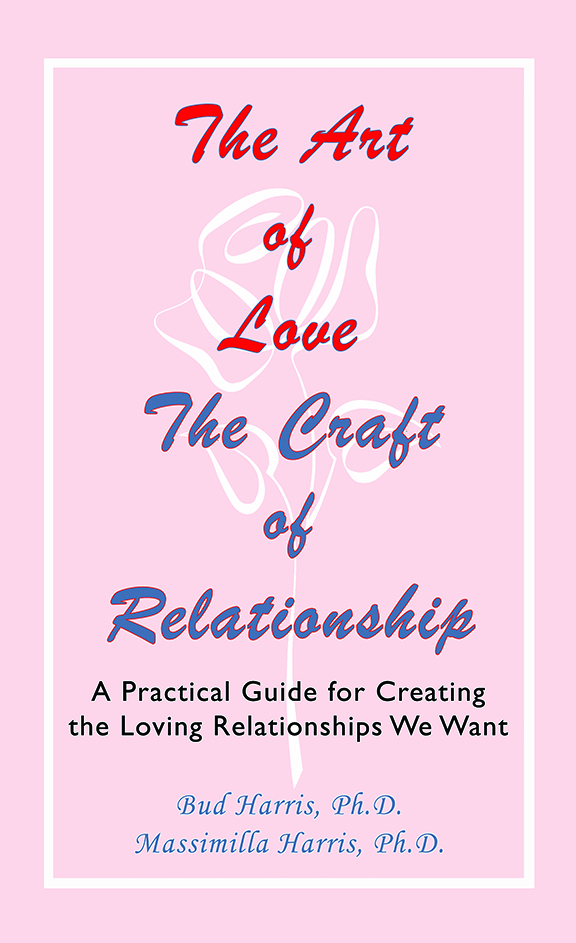
      The Art of Love: The Craft of Relationship
      A Practical Guide for Creating the Loving Relationships We Want

      Product Description
      Millions of books on relationships have been printed in the last ten years. Why do we need another one? We need The Art of Love: The Craft of Relationship for the same reasons that over four and a half million readers wanted Spencer Johnson's Who Moved My Cheese in a market that already had over 12,000 titles in print on the subject of change. Following Johnson's methods of teaching to a broad, modern audience, our book presents the profound principles that form a loving relationship in an easily accessible manner. Using a deceptively simple approach, it will help people shift their attitudes and give them the skills to create a loving, long-lasting partnership.

      There are so many titles in print on change because it is an ongoing challenge for most of us. So are relationships. With more than six decades of experience working with couples, we knew we had vital information, lessons, and insights to share, but we insisted that the book be short, engaging, and easy to read. A helpful book does not have to be dense to be packed with wisdom, skills, and ideas that can open the door to a new era of fulfilling relationships.

      We have brought complex material and common sense into a format that is carefully constructed to achieve results by being communicative and consistent, enjoyable and hopeful. Unlike the textbook appearance of most self-help books that include psychological jargon, case examples and exercises, The Art of Love: The Craft of Relationship uses stories and dialogue to teach profound insights and valuable skills. It sticks to people talking in a way the reader can identify with and understand. It brings hope because the reader who is experiencing stress in a relationship can see that other people, like them, are, too. And, that learning a few basic skills can bring lasting change and renew love.

      The best news is that our book will be useful to many people because it will give them a new way to look at their relationship and the skills to handle problem after problem in a way that builds love and trust. Our mission is to appeal strongly to those who are considering a relationship, seeking to renew one, or are looking for a way to understand a partner and a process for dealing with problems in love, romance, sex, intimacy and living together.

      About the Authors
      Massimilla and Bud Harris are diplomates of the C.G. Jung Institute in Zurich, Switzerland. They are practicing Jungian analysts in Asheville, NC., and lecture extensively. Bud Harris is also the author of several publications including Resurrecting the Unicorn: Masculinity in the 21st Century, The Father Quest: Rediscovering an Elemental Force, Sacred Selfishness: A Guide to Living a Life of Substance, and The Fire and the Rose: The Wedding of Spirituality and Sexuality.

      Product Details
      Title: The Art of Love: The Craft of Relationship
      Paperback: 140 pages
      Publisher: Fisher King Press; First edition (May 15, 2010)
      Language: English
      ISBN-10: 1926715020
      ISBN-13: 978-1926715025
      Fisher King Press publishes an eclectic mix of worthy books including Jungian Psychological Perspectives, Cutting Edge Fiction, and a growing list of alternative titles.
        • We Ship Worldwide.
        • Credit Cards Accepted.
        • Phone Orders Welcomed: +1-831-238-7799 skype: fisher_king_press