Tuesday, March 2, 2021

I Ching, Jung, Tao and Synchronicity

Here is a link to a major presentation that Fisher King Press author Dennis L. Merritt gave on February 21, 2021, to the C. G. Jung Club of Orange County on “The I Ching—Oracle and Book of Wisdom”.

The I Ching is one of the oldest and most profound books of wisdom whose origins go back to Chinese shamanism and prototypical Chinese ideograms. Jung, who used it extensively, described the I Ching as a book of archetypal imagery first assembled in 1050 BCE. Every major Chinese thinker, artist, and philosopher had been influenced by I Ching until the modern era. One can put a question to the book and via synchronicity get a meaningful answer as if from a Chinese sage. Examples are given to illustrate how the book can be used personally and in the therapeutic setting for guidance on relationships, difficult life situations, and psychological and spiritual development.

The most complex part of my presentation explores the binary code numerical base of the I Ching, which computers run on, and how numbers as the purest forms of the archetypes (Jung) framed the thinking of the sages as they put images and words to abstract numbers beginning with yin and yang lines. Hermes from our Western tradition is used to illustrate how things cross over from what Lao Tzu called the “dark enigma” into consciousness.

https://uci.zoom.us/rec/play/fltK-SapUY39XNrTxatcgAJVD03z5rQ7QyxuNmcg9sFa55sO-lHuqAYWxE26VB4L5W0oVS_2a0Q11b6-.9jMk5ur_mRyfESRI?startTime=1613951061000
Fisher King Press publishes an eclectic mix of worthy books including Jungian Psychological Perspectives and a growing list of Cutting-Edge alternative titles. www.fisherkingpress.com

Monday, April 6, 2020

Merritt on: Covid-19: Inflection Point in the Anthropocene Era and the Paradigm Shift

Covid-19: Inflection Point in the Anthropocene Era and the Paradigm Shift of Jung’s New Age

Article by Dennis L. Merritt, Ph.D.

The Covid-19 pandemic has created a unique moment in the history of our species. Something so small it takes an electron microscope to see is disrupting millions of lives and threatening the world’s economy. Frontline workers risk their lives trying to save patients who may die alone without friends or family at their sides. A virus, a strand of nucleic acid that highjacks the functioning of a cell to reproduce its unique viral form, is bringing our species to a near standstill. Despite the wonders of science, technology, and economic systems we can still be humbled by nature, indeed, by a strand of nucleic acid. It is crucial how we respond to the situation. What can we learn from it and how do we go forward?

We start with an adequate framing of the issue. This is an issue of life and death, which means it is in the most fundamental archetypal realm and requires an archetypal perspective. The fear of death from the pandemic is bringing a sense of immediacy and urgency on a planet-wide scale. Death cannot be separated from life, death makes us aware of the preciousness of life, and death confronts us with questions about the meaning of existence and our place it the bigger scheme of things. Death can bring an end to systems and beliefs that no longer support life and a healthy existence, and that could be the most important outcome of the present crisis.

The virus is demonstrating to what degree we are interconnected and how much we need each other. The forced social isolation and six-foot distancing has cut us off from intimate contacts and group experiences making us aware by absence how important we are to each other.  The ghostly empty streets in otherwise bustling cities are eerie reminders that our systems are in shock at all levels. Like a nightmare that wakes us in the middle of the night, this shock is meant to shock us into a new awareness.

Read more...

Dennis L. Merritt, Ph.D., is a Jungian psychoanalyst and ecopsychologist in private practice in Madison and Milwaukee, Wisconsin. Dr. Merritt is a diplomate of the C.G. Jung Institute, Zurich and also holds the following degrees: M.A. Humanistic Psychology-Clinical, Sonoma State University, California, Ph.D. Insect Pathology, University of California-Berkeley, M.S. and B.S. Entomology, University of Wisconsin-Madison.

Dr. Merritt is the author of Jung, Hermes, and Ecopsychology: The Dairy Farmer's Guide to the Universe Volumes 1 - 4.


Monday, January 7, 2019

Press Release: Just Published - Fairy Tales with a Mexican Twist


January 7, 2019

Fisher King Press announced today their newest publication:

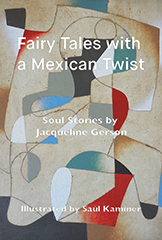
Fairy Tales with a Mexican Twist: Soul Stories

by Jacqueline Gerson

illustrations by Saúl Kaminer

Fairy tales convey life’s magic, reflecting the deep psychological themes that govern the outcomes of our lives. Written in simple language, these stories take us along soul’s path once more, revealing how the issues of today can still yield new restorative meanings. This fresh set of tales introduces characters who invite the reader to think the unthinkable, explore the unknown, and feel what is irreconcilable—resulting in a deeper experience of life itself. Staged in remote corners of the world where healing mysteries can be summoned when life’s dilemmas emerge and right and wrong are no longer clear, Gerson’s fairy tales show that there are still Gods and Goddesses who can intervene when humans lose their way on life’s journey.

In simple language, deep psychological themes concerning the soul’s path are illustrated through new fairy tales which bring up life’s magic into often present everyday issues. 28 color illustrations.

About the Author
Jacqueline Gerson is a Jungian analyst with a private practice in Mexico City, where she works as an analyst, teacher, and supervisor. With a lifelong passion for dance and movement, she first approached dreams as spontaneous choreographies created by the psyche. Eventually, that discovery led her to the study of Analytical Psychology to become an individual member of the IAAP. She lectures on topics related to analytical psychology and has been published in The San Francisco Jung Institute Library Journal, with Daimon Verlag, Brunner-Routledge, Spring Journal, as well as the Mexican magazine Epoca. As a new way for her to relate to most sensitive aspects in life, writing stories became apparent. Her special joys are grandmothering, dance movement, writing, poetry, and nature.

About the Illustrator
Saúl Kaminer was born in Mexico City on July 8, 1952. He graduated as an architect from the Mexican National University (UNAM). He started his artistic work in 1970 and moved to Paris in 1976 where he worked intensely in his paintings and sculptures. After 22 years in France, Saul continued his artistic work in Mexico. So far, he has had 65 individual expositions and participated in 160 collective expositions in various countries in the Americas, Europe, and Asia.


Title: Fairy Tales with a Mexican Twist: Soul Stories
Author: Jacqueline Gerson
Illustrator: Saúl Kaminer
Paperback: 170 pages with 28 color illustrations
Condition: New
Publisher: Fisher King Press (January 7, 2019)
Language: English
ISBN-10: 1771690461
ISBN-13: 978-1771690461
Also available as an eBook from Google Play
Fisher King Press publishes an eclectic mix of worthy books including Jungian Psychological Perspectives and a growing list of Cutting-Edge alternative titles. www.fisherkingpress.com

Sunday, November 25, 2018

Advent and Psychic Birth - An Introduction

From Advent and Psychic Birth by Mariann Burke

Meister Eckhart in a Christmas sermon paraphrasing St. Augustine says of Christ's birth, "This birth is always happening. And yet, if it does not occur in me, how could it help me? Everything depends on that."(1) The thesis of this book is that our own psychological "birth" is related to the "birth" of God within us, and that this birth is "always hap­pening." The paradox is that we long for this birth and yet we fear it. For centuries our unconscious fears and longing have been mirrored and "contained" in the religious dogma and symbolism of the church, a channel to the riverbed of the unconscious. But in a church and a culture that general­ly devalues the feminine realm--earth, the body, sexuality, instinct--these energies flow back into the psyche. Today the longing for consciousness and the integration of these energies have led many to leave the church which, they feel, no longer speaks to their needs. Others find spiritual ful­fillment in a strong adherence to traditional doctrinal and Biblical interpretation. Still others, in increasing numbers, find that a more personal inner journey leads not only to greater self-awareness, but also to a richer appreciation of their religious heritage.

My approach throughout Advent and Psychic Birth is to try to make connections between the archetypal images and personal experience, in both ancient and modern modalities, through associations, amplifications and clinical material. In one sense this approach has evolved out of my training in ana­lytical psychology. Yet it has become deeply personal and flows out of my own felt sense of the Advent imagery and my own journey toward psychic birth. Far from diminish­ing my faith in Christ, it has broadened and deepened my understanding of the meaning of incarnation. Jung writes: "The efficacy of dogma by no means rests on Christ's unique historical reality but on its own symbolic nature, by virtue of which it expresses a more or less ubiquitous psy­chological assumption quite independent of the existence of any dogma."(2) On first reading these words we may feel that Jung is undermining dogma and Christ's mission on earth, yet our own experience as it relates to the underlying pattern of dogma, can only serve to enrich its meaning. "In religious matters ... we cannot understand a thing until we have experienced it inwardly ... for it is in this experience that the connection between the psyche and the outward image or creed is revealed .... "(3)

For each of us the image that speaks to us differs. For some it is an image from the Bible or from another religious tradition, while for others it is a dream image, or an image that seems to surface directly from the body. Each of these can be received as "messages " from God.

If we look at the biblical poetry of Advent in a more personal way, we find that while it belongs to the Hebrew and Christian scriptures, it transcends both. Beginning in darkness and destruction and ending in light and rebirth, Advent imagery represents a mythic or archetypal pattern. The Advent call to awaken from sleep is a call to follow the way of consciousness, to search for the inestimable gift, the treasure of the "hidden" self as well as the Imago Dei which carries the power to revitalize us both as individuals and communities. Symbolically, the four Sundays of Advent remind us of the quarternity and of wholeness, as does the familiar Advent wreath with its four candles, one lighted each week suggesting the gradual dissipation of inner and outer darkness. During the first three weeks of the Advent liturgy, the tone is decidedly one of action and movement, beginning with the Baptist's call to prepare a way. With the desert "transition" the tone changes, and during the fourth week the Virgin appears, strong, questioning, willing to trust in the unknown. As in any religious initiation we are led to participate in a new dimension of life. Here, if we can con­tact our own "virgin energies," we listen as the angel speaks and we, in silence, like Mary, wait as the earth "buds forth a savior."

Wednesday, July 18, 2018

Four Volumes of Jungian Ecopsychology

The four volumes of The Dairy Farmer’s Guide to the Universe offer a comprehensive presentation of Jungian ecopsychology.

Volume 1, Jung and Ecopsychology, examines the evolution of the Western dysfunctional relationship with the environment, explores the theoretical framework and concepts of Jungian ecopsychology, and describes how it could be applied to psychotherapy, our educational system, and our relationship with indigenous peoples.

Volume 2, The Cry of Merlin: Jung, the Prototypical Ecopsychologist, reveals how an individual’s biography can be treated in an ecopsychological manner and articulates how Jung’s life experiences make him the prototypical ecopsychologist.

Volume 3, Hermes, Ecopsychology, and Complexity Theory, provides an archetypal, mythological and symbolic foundation for Jungian ecopsychology.

Volume 4, Land, Weather, Seasons, Insects: An Archetypal View describes how a deep, soulful connection can be made with these elements through a Jungian ecopsychological approach. This involves the use of science, myths, symbols, dreams, Native American spirituality, imaginal psychology and the I Ching.

Together, these volumes provide a useful handbook for psychologists and environmentalists seeking to imagine and enact a healthier relationship with their psyches and the world of which they are a part.


Fisher King Press publishes an eclectic mix of worthy books including Jungian Psychological Perspectives and a growing list of Cutting-Edge alternative titles. www.fisherkingpress.com

Sunday, July 15, 2018

The Eros Template: Some Common Themes of (Male) Narcissism

The following is an excerpt from
Eros and The Shattering Gaze; 
Transcending Narcissism
by Kenneth Kimmel

The Eros Template

Eros is an unrepentant, narcissistic lover who retreats from all emotional attachments. He takes the first steps toward maturity and love only after suffering and enduring a life-changing wound that opens him. We find him brought to life by countless writers and artists in many guises and circumstances throughout the long, meandering history of the Western world. Eros, son of Venus, husband of Psyche, is the prototype of the many versions of the puer aeternus we will meet in Eros and The Shattering Gaze; Transcending Narcissism. We recognize him through the actions of men who leave behind the scattered wreckage of lost relationships. This type of man harms many women in their search to find the diamond in the dung heap of love and relationship. He’s the one who leaves a goodbye note, is caught with the best friend, or turns cold and distant when the “L” word is spoken. It is ironic that these men who give so little are loved so much. This is due, perhaps, to their aura of specialness, or to their accomplishments, attractiveness, sensitivity, charisma, charm, and creativity, or even to that pitiful little-boy-lost quality that can evoke a mothering response in the most independent of partners.

Apuleius’ “Tale of Amor and Psyche” is the classical story that best charts the course of these men’s romantic, narcissistic, and even predatory love. It is embodied in the character of Eros as well as in that of Lucius, the hero of The Golden Ass. These stories follow Eros and Lucius through their wounding and suffering, and toward the possibility of mature love, humility, and devotion. Regarding this from the standpoint of the male (as opposed to that of women), one can extract from Eros a template that outlines the key qualities of one pattern in narcissism—that of “mother’s perfect little god,” who habitually seeks instant pleasure in paradise but never in mutual relationships.
Here are some of the common themes of narcissism in the Eros Template extracted from “The Tale of Amor and Psyche.” They are generally found embedded in our notions of romance and love, and are met throughout Western history.

Mother’s special boy. He is the divine son of his mother. He is so special, and he knows no bounds. He can’t take no for an answer. His desires and impulses must be gratified instantly. He is incestuously bonded to his mother, but as long as he does her bidding she protects him from the slings and arrows of the cruel world that may try to knock him down a few pegs for being so full of himself.

His beauty is only skin deep. He is a physically beautiful man but he lacks the capacity for internal reflection. His life centers around surface things: fulfillment of physical desires, attainment of beautiful possessions, and expectations of perfection. The great control and power that he must exert over his outer environment and relationships is a form of compensation for an emotionally unstable and chaotic internal identity that he cannot hold in check.

Predator. His desires are fueled by an internal lack, and when he becomes satiated he searches ceaselessly for a new object of desire and pleasure. He is a predatory hunter. He seeks the adrenaline rush of sexual conquest and power over the helpless victim. Like Psyche awaiting her sacrifice atop the mountain, she is merely his thing to be used to meet his needs.

He seeks fusion in relationships. He maintains his control over the love object by keeping her in the dark about who he really is. She has no identity separate from his, and as long as she is fused with him she is not an object to be related to but is compelled instead to be an object of his desire alone. He unconsciously seeks to relive the fantasy of incest with his own mother in his own little Garden of Eden, by finding her substitute, the newer version of Venus—young Psyche.

He is split between his mother and his lover. His loyalty is split between the need for mothering and the desire for the mature love of a woman, a division that interferes with his maturation and prolongs his stay in eternal youth. Alternatively, he is tossed between his longing for the untouched virgin and his desire for pleasures that only the goddess of love may bestow.

Idealization and devaluation of the object of love. He is always in search of the ideal, perfect woman. Because she is only human, the woman merely plays a role in his perfect fantasies and he has no idea who she really is. The moment she begins deviating from his expectations his feelings turn cold or destructive. Her imperfections arouse all sorts of uncertainties and insecurities within him, and to avoid those unstable feelings he must devalue her. Using her to maintain his stability and his illusions of perfection, he can also blame her when she lets him down. He sets things up so that he never has to look within to his own weaknesses. He rids himself of his own bad feelings by dumping them into the devalued woman.

The narcissistic wound leads to negation of the other. Owing to an unstable identity, he is full of exaggerated sensitivity and therefore is easily slighted and wounded, which leads to negation and devaluation of his ideal love object. Because the internal feelings prove too unbearable to look at, he instead chooses to retaliate against any perceived betrayal that causes him pain. He will easily abandon and evacuate the woman from his mind if it will allow him to avoid suffering.

Continual return to mother to avoid the difficulties of life. He will seek the old familiar retreat to his mother’s rooms to heal the narcissistic wounds inflicted by what he sees as a cold, cruel world, a world that demands to meet him as a real person. He is split between the need for security, sympathy, and maternal comfort, and the instinctive hunger for sexual gratification.

Feigned innocence serves to mask his own destructive, hateful impulses. By splitting off his awareness he turns a blind eye to the terrible mother and her group of vengeful handmaidens who fall mercilessly upon Psyche when she surrenders herself to Venus. By involving himself so exclusively in bemoaning his own mistreatment, Eros feigns innocence. His guilt lies in his complicity. A man such as this can bat his eyelashes innocently while he compartmentalizes his hatred and aggression, though it will often seep out indirectly, passively.

The mother-bound man destroys all links to human relationships. Mother-Venus and her handmaidens threaten Psyche with death if she fails to fulfill any of the impossible tasks set before her. They hope to destroy any links to love, dependency, and vulnerability. As in the previous paragraph, Eros feigns innocence as the dirty work is done for him, thus insulating himself from real life and real relationships and the pain that might ensue. These destructive handmaidens exist within the mother-bound man as protecting and persecuting objects, encapsulating him in a shell and protecting him from the risk of an intimacy that might cause him pain. He stays safe within mother’s orbit, unwilling to break free of her power. On a conscious level he is only cognizant of his role as the “offended party” and will not own responsibility for the violence he inflicts on others when defending himself against perceived threats to his self preservation.

The wounding that pierces the narcissistic shell. In the end, Eros has suffered through his wounding and his separation from his wife Psyche. The bearing of shame plays a vital role in deflating one’s omnipotence (although this step is not as clearly elucidated with Eros as it is with Apuleius’ main character, Lucius). Eros develops within himself the courage and resilience to defy his mother’s wrath and to return to Psyche. The wound that Eros ultimately bears exposes the false self that he has perpetuated in order to maintain his illusion of control over life. He chooses the life-giver, as Neville Symington calls it, with all its uncertainties (Narcissism: A New Theory (London: Karnac Books, 1993), 80.

Repairing the capacity to love. A psyche must develop a resilience and cohesiveness in order to bear the vicissitudes of life, and from this, love in its transcendence may emerge. In the story, Eros comes to see this in Psyche, as he realizes the depth of her sacrifice and devotion, all for the sake of love. Her courage has touched something within him that inspires him to break out of his prison and seek connection and love in a human way. He discovers the capacity for care and the meaning of sacrifice. He repairs his marriage, but only after the couple suffer through separation, pain, and loss. Through a process of great suffering in which the capacities for transcendence emerge, Psyche, recognized as a man’s inner psyche-soul-anima, transcends the maternal complex in which she has been mired. Love frees the soul.
Fisher King Press publishes an eclectic mix of worthy books including Jungian Psychological Perspectives and a growing list of Cutting-Edge alternative titles. www.fisherkingpress.com

Friday, July 13, 2018

Remembering Erel Shalit, 1950 – 2018

Remembering Erel Shalit, 1950 – 2018

Erel Shalit was a Jungian psychoanalyst in Tel Aviv and worked as a training and supervising analyst. He was a past president of the Israel Society of Analytical Psychology and founder and past director of the Jungian Analytical Psychotherapy Program at Bar Ilan University. Earlier in his career he was the director of the Shamai Davidson Community Mental Health Clinic.

Erel Shalit was instrumental in firmly establishing Fisher King Press as a publisher of Jungian Psychology Books: Publishing Enemy, Cripple, Beggar: Shadows in the Hero’s Path in July of 2007 was the stamp of approval that brought Fisher King Press credibility in the Jungian circles and in turn so many other fine Jungian authors.

Dr. Shalit authored several Fisher King Press publications, including: The Cycle of Life: Themes and Tales of the Journey, Requiem: A Tale of Exile and Return, Enemy, Cripple, Beggar: Shadows in the Hero’s Path, The Hero and His Shadow: Psychopolitical Aspects of Myth and Reality in Israel. With Nancy Swift Furlotti, Erel co-edited, The Dream and its Amplification.

I am grateful to have been a friend of Erel Shalit, grateful to be the publisher of so many of Erel’s books, grateful for all of the love, compassion, and consciousness he has brought to the world.

Mel Mathews
Publisher, Fisher King Press
Fisher King Press publishes an eclectic mix of worthy books including Jungian Psychological Perspectives and a growing list of Cutting-Edge alternative titles. www.fisherkingpress.com

Thursday, July 12, 2018

Remembering Thomas B. Kirsch

Remembering Thomas B. Kirsch
June 10, 1936 – October 22, 2017

From conception on, C.G. Jung, his ideas, and analytical psychology itself was a central thread of Thomas B. Kirsch’s life. His parents, James and Hilde Kirsch, were in analysis with C.G. Jung when Tom was born, and he was imaged to be the product of a successful analysis. At an early age, Dr. Kirsch was introduced to many of the first-generation analysts who surrounded C.G. Jung, and over time became acquainted with them. Later, in his roles with the IAAP, Dr. Kirsch gained a broad knowledge of the developments in analytical psychology, and through both his early family history and in his later professional life, he worked closely with many analysts who were integral in forming the foundations of analytical psychology.

Dr. Kirsch graduated from Yale Medical School in 1961, did his residency in psychiatry in the Department of Psychiatry at Stanford University, and then spent two years with the National Institute of Mental Health in San Francisco. He completed his Jungian training at the C.G. Jung Institute of San Francisco in 1968. In 1976 Dr. Kirsch became president of the Jung institute in San Francisco, and in 1977 he was elected second vice president of the International Association for Analytical Psychology, or IAAP, the professional organization of Jungian analysts around the world. As vice president and then president of the IAAP for eighteen years, he traveled the world and was able to meet Jungian analysts from many different countries. This position allowed him to serve a missionary function of sorts in new areas like China, South Africa, Mexico, Russia, and other former Soviet Eastern Bloc countries. In A Jungian Life, Thomas B. Kirsch reflects upon his entire existence which has been intimately involved with C.G. Jung and analytical psychology.

We are grateful for the generous contributions Thomas B. Kirsch has made to humanity, and we are proud to be the publisher of his memoir: A Jungian Life.

Mel Mathews
Publisher, Fisher King Press
Fisher King Press publishes an eclectic mix of worthy books including Jungian Psychological Perspectives and a growing list of Cutting-Edge alternative titles. www.fisherkingpress.com

Saturday, July 7, 2018

Jungian Child Analysis - News Release


Just Published by Fisher King Press

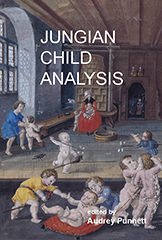
Jungian Child Analysis

Jungian Child Analysis brings together ten certified Child and Adolescent Analysts (IAAP) to discuss how healing with children occurs within the analytical framework. While the majority of Jung’s corpus centered on the collective aspects of the adult psyche, one can find in Jung’s earliest work clinical observations and ideas that reflect an uncanny prescience of the psychological research that would later emerge regarding the self and the mother-infant relationship. This book discusses and illustrates in very practical ways how one uses an analytical attitude and works with the symbolic: this includes illustrations of analytical play therapy, dream analysis, sandplay, work with special populations and work with the parents and families of the child. Not only will the book capture your interest and further your development in working with children and adolescents, but also will enhance your work with adults.

Jungian Child Analysis, edited by Audrey Punnett; foreword by Wanda Grosso; contributors include Margo M. Leahy, Liza J. Ravitz, Brian Feldman, Lauren Cunningham, Patricia L. Speier, Maria Ellen Chiaia, Audrey Punnett, Susan Williams, Robert Tyminski, and Steve Zemmelman.

Contents:
Preface – Wanda Grosso
Introduction – Audrey Punnett

Chapter 1 – Margo M. Leahy
Jung and the Post-Jungians on the Theory of Jungian Child Analysis

Chapter 2 – Liza J. Ravitz
Child Analysis and the Multilayered Psyche

Chapter 3 – Brian Feldman
The Aesthetic and Spiritual Life of the Infant: Towards a Jungian View of Infant Development

Chapter 4 – Lauren Cunningham
Play, Creation and the Numinous

Chapter 5 – Patricia L. Speier
The Portal of Play Through a Jungian Frame

Chapter 6 – Maria Ellen Chiaia
The Importance of Being: Silence in Child Analysis

Chapter 7 – Audrey Punnett
Children’s Dreams

Chapter 8 – Susan Williams
Awakening to Inter-subjectivity: Working with Autistic Spectrum Disorders

Chapter 9 – Robert Tyminski
Males Coming to Terms with Sexuality in Later Adolescence

Chapter 10 – Steve Zemmelman
Working with Parents in Child Analysis and Psychotherapy: An Integrated Approach


Editor: Audrey Punnett
Paperback: 250 pages
Condition: New
Edition: First
Index, Bibliography
Publisher: Fisher King Press (May 21, 2018)
Language: English
ISBN-10: 1771690380
ISBN-13: 978-1771690386
Fisher King Press publishes an eclectic mix of worthy books including Jungian Psychological Perspectives and a growing list of Cutting-Edge alternative titles. www.fisherkingpress.com

Wednesday, March 21, 2018

Emily Dickinson: A Medicine Woman for Our Times

Just Published by Fisher King Press

Emily Dickinson: A Medicine Woman for Our Times
by Steven Herrmann

Among the 19th century poets, Emily Dickinson is by far the most scientifically minded. Science is the voice that summoned Dickinson at Mount Holyoke Female Seminary and gave her unique distinction as a poetess of botanical and entomological and astronomical classifications. Like no other 19th century poet she forms an integration between science and spirituality. She studied at Holyoke at the exact historical moment of the first Seneca Falls Women’s Rights Convention in 1848. This, therefore, is a feminist book. It speaks up for the Divine Feminine. On the front cover purple-white rosemary blossoms are exploding with color. Emily Dickinson’s garden was a place where butterflies, bees, and hummingbirds drank up the radiance of flowers. Rosemary in particular was one of her favorite healing herbs. C.G. Jung mentions the antitoxin of rosemary flowers as a synonym for the Self, the total personality. When Steven Herrmann refers to Emily Dickinson as a Medicine Woman, he is speaking of an archetype of healing within all humans. Her poems are enduring imprints of the Medicine Woman archetype. It is by access to the Medicine Woman archetype that she’s able to espouse a democracy of equality that the world needs right now. She advises women to cherish “Power” and take heed from the Serpent. We need a Medicine Woman to balance things out. In a democratic sense, she’s a fierce and uncompromising spokeswoman for Liberty. Emily Dickinson is a dispenser of a new American myth for our times.

About the author
Recognized internationally, Steven Herrmann is the author of William Everson: The Shaman’s Call, Walt Whitman: Shamanism, Spiritual Democracy, and the World Soul, and Spiritual Democracy: The Wisdom of Early American Visionaries for the Journey Forward. In 2015 his chapter “C.G. Jung and Teilhard de Chardin: Peacemakers in an Age of Spiritual Democracy” was published in Pierre Teilhard de Chardin and Carl Gustav Jung Side by Side. He has taught on the subjects of Jung, Whitman, and Melville at the C.G. Jung Institutes of San Francisco, Chicago, and Zürich, UC Berkeley and UC Santa Cruz, and on Jung and James at Yale University. Herrmann’s expertise in Jungian Literary Criticism makes him one of the seminal thinkers in the international field, and a foremost authority on Whitman, Melville, and now Dickinson in post-Jungian studies.

Emily Dickinson: A Medicine Woman for Our Times
Paperback: 298 pages, Index, Bibliography
Publisher: Fisher King Press
1st edition
Official Publication date: March 21, 2018
Language: English
ISBN 10: 1771690410
ISBN-13: 9781771690416
Fisher King Press publishes an eclectic mix of worthy books including Jungian Psychological Perspectives and a growing list of Cutting-Edge alternative titles. www.fisherkingpress.com

Monday, September 11, 2017

War and The Enemy in the 21st Century

One of the greatest rewards of being a publisher is in reflecting and rejoicing in the many meaningful and timely Fisher King Press publications. It truly is a privilege to be the midwife of these newborns—many of whom arrive far ahead of their time—and to witness their maturing and assimilation into the collective consciousness.

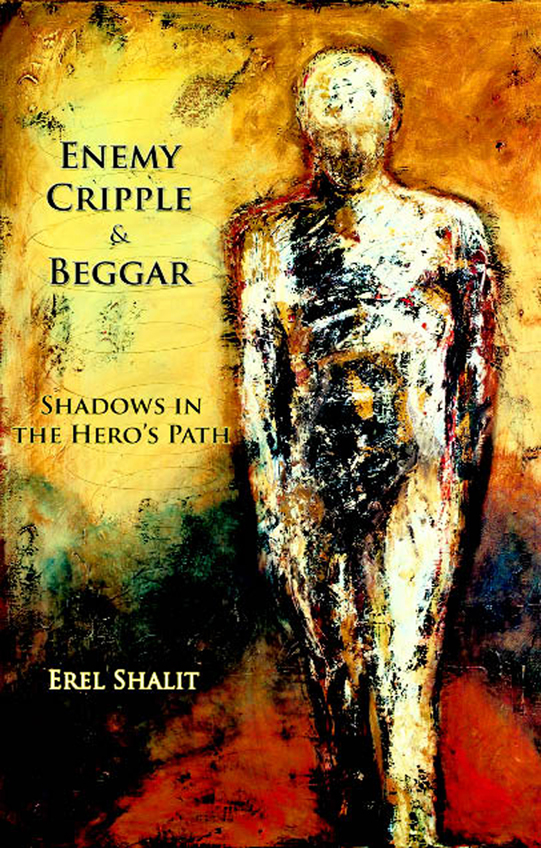
With the wars being fought on many fronts, and with the posturing and possibility of yet more, I reached for Erel Shalit’s Enemy, Cripple, Beggar: Shadows in the Hero’s Path (which we published in 2008) and have been reading from Shalit’s chapter on The Enemy, which in the beginning of the chapter, states:
On [the journey], the hero initially meets the Enemy, because the previously unrealized and unconscious dark side, the shadow, is often first encountered in projection, as carried by the enemy. 
In reference to the First World War, Jung wrote in 1916: "As events in wartime have clearly shown, our mentality is distinguished by the shameless naïveté with which we judge our enemy, and in the judgment we pronounce upon him we unwittingly reveal our own defects: we simply accuse our enemy of our own unadmitted faults." (C.G. Jung, Collected Works 8, 2nd ed., par. 516.)
The realization of the enemy shadow—whether persecuted by it, or when trying to flee or to fight it—provides a possibility of energizing the ego. In the inward process of finding one’s pain and resources, and in order to eventually find one’s way to the inner wounds that unsettle us if we do not attend to them, to find the wounded child in our soul, it is necessary to go through the projections of the shadow . . .
This is just the first few paragraphs of the chapter that explores many facets of the enemy archetype. If you have a copy of Enemy, Cripple, Beggar, I encourage you to revisit this timely publication. If you do not have a copy . . . well, here’s a link to purchase a copy of this rich and worthy book: Enemy, Cripple, Beggar.

As the publisher of Fisher King Press, I would also like to extend a heartfelt thank you to the many readers of our publications, and to our authors who have done the hard work of research, mining the depths of their inner worlds, and for bring back to us these timeless gems.
Fisher King Press publishes an eclectic mix of worthy books including Jungian Psychological Perspectives and a growing list of Cutting-Edge alternative titles. www.fisherkingpress.com

Friday, May 19, 2017

Love Poems and Other Terrible Problems

Just Published by il piccolo editions

Love Poems and Other Terrible Problems
by Charles Zeiders

Charles Zeiders has given us a great gift; a poet, healer, and lover, he shares with fearless eloquence his heart, his mordant wit, and his empathic depth. Most of all, however, he inspires hope, hope in the human soul. I am captivated by his words and reading him I can feel my soul's enthusiastic approbation. You must give your soul the same pleasure. -Dr. Stephen Martin, Jungian Analyst and President Emeritus of the Philemon Foundation

Love Poems and Other Terrible Problems teems with psychic and spiritual energy. It’s like a Hieronymus Bosch painting that includes the Marx Brothers and splotches of transcendent gold. - Peter Devlin, from the Introduction

Zeiders’ love poems depict the paradoxes of a Christ-redeemed eros . . . But the volume explores the insane side of love…Like Dante’s Virgil, Zeiders navigates us through an earthly Inferno of malignant narcissists, charlatans, and pedophiles…Thankfully, the poet brings us safely to the other side . . . Just as the Christian vision of the universe begins and ends with Love, so Love Poems and Other Terrible Problems provides hope.  -Joseph Walls, from Kiss Epiphany: A Spiritual Critique of Love Poems and Other Terrible Problems

From the exploration of the transfigured state found in the “Love Poems” we turn to the “Other Terrible Problems” . . . Nietzschean nihilism presses upon us. So does war and gore…Psychopaths head our institutions . . . we cannot find a way to offer our eros in the mad contexts they create . . . yet, the lesson is that within the container of love . . . one’s entire humanity can be accepted. -Margaret Connolly, from the Editor’s Afterword

About the author
Charles Zeiders is a clinical and forensic psychologist. His books include The Clinical Christ and Wall Street Revolution and Other Poems.

Love Poems and Other Terrible Problems
Paperback: 104 pages
Publisher: il piccolo editions
1st edition
Official Publication date: May 19, 2017
Language: English
ISBN 10: 1771690445
ISBN-13: 9781771690447
Fisher King Press publishes an eclectic mix of worthy books including Jungian Psychological Perspectives and a growing list of Cutting-Edge alternative titles. www.fisherkingpress.com

Tuesday, February 28, 2017

After Midnight: Selected Poems

Just Published by il piccolo editions

After Midnight: Selected Poems
by Joseph Bobrow

"Joseph Bobrow’s poems are prayers for safe haven. They are sutras for life, for the protection of soldiers, children, mothers, fathers, everyone. We can take refuge in our relationships with one another, and in the beauty of the world." —Maxine Hong Kingston, author, activist, and the recipient of the National Medal of Art from President Barack Obama.

"Joseph Bobrow’s poems know that every day we are dying and that every one of those dying days we are also fully alive. He writes that “memory and inclination are subject to conditions on the ground,” and so they are in these moving poems which are the gift of seeing and of the ability to respond to tragedy and delight in equal measure while weaving them into the fabric of a life fully realized." —Dan Gerber, author of Sailing through Cassiopeia, 2013 Book of the Year Award in Poetry from The Society of Midland Authors.

"Joseph Bobrow’s poems are down-to-earth meditations on the poignant mysteries of life, love, and loss. Not one is abstract or philosophical; every one is a Dharma talk with heart. I kept touching into moments of Bobrow’s experience that mirrored—and enriched—my own. Bows!" —David Richo, author of You Are Not What You Think: The Egoless Path to Self-Esteem and Generous Love. 

"Reading Joe Bobrow’s poetry makes me want to live more wildly, more fully. His poems live in an irresistible arc between the raw and vivid details of his precious life and a sense of vastness, of spaciousness, of universality. I want to return to these poems again and again. His voice makes me want to reply with my own poetry, and to touch his voice in the darkness." —Stephen Cope, best-selling author of The Great Work of Your Life and Yoga and the Quest for the True Self

"In the dense moments of Bobrow’s writing intensity hovers, swells. Pain and bliss rise, fall, rise again. Which will it be moment to moment? Where can we go when it is happening? Seek refuge in a poem? These poems accost us with more of how it feels to be alive. Be ready. —Michael Eigen, Author of Under the Totem: In Search of a Path

About the Author 
Joseph Bobrow is the author of Waking Up From War: A Better Way Home for Veterans and Nations (foreword by His Holiness the Dalai Lama), Zen And Psychotherapy: Partners in Liberation (comments by Ven. Thich Nhat Hanh), and the co-translator of Thich Nhat Hanh’s Guide To Walking Meditation. After Midnight: Selected Poems is his first collection of poems.

Joseph is a Zen master and Roshi of Deep Streams Zen Institute in Santa Barbara, which offers Zen Buddhist practice, interdisciplinary education, and peace-building programs that implement new integrative models of transforming suffering. For ten years, Coming Home Project, a community service of Deep Streams Zen Institute, helped thousands of post-9/11 service members, veterans, families, and caregivers transform the unseen injuries of war. A retired psychoanalyst, Joseph now serves on the faculty of Pacifica Graduate Institute and teaches widely.

Title: After Midnight: Selected Poems
Author: Joseph Bobrow
Paperback: 60 pages
Condition: New
Publisher: il piccolo editions (Feb 28, 2017)
Language: English
ISBN-10: 1771690429
ISBN-13: 978-1771690423
Fisher King Press publishes an eclectic mix of worthy books including Jungian Psychological Perspectives and a growing list of Cutting-Edge alternative titles. www.fisherkingpress.com

Saturday, February 11, 2017

Our Creative Fingerprint

Just Published by Fisher King Press

Our Creative Fingerprint
by Nancy Carter Pennington and Lawrence H. Staples

Creative work is the handmaiden of self-discovery. No matter where our creative work starts or what path it follows—with a word, with a note, with a brushstroke—it eventually, with repeated effort, returns us home to the very source of our beings. We are never more true to ourselves than when we are creating something. Inexorably, what we create reflects ourselves as profoundly, faithfully and uniquely as our fingerprints. Each single thing we create, no matter when or under what conditions it was produced, will bear trace deposits of ourselves, a creative fingerprint sufficient to identify us and show who we are just as our physical fingerprints do.

For those who know how to interpret them, our creative fingerprints are as unerring as our physical fingerprints in identifying us. Our creations are self-portraits. We cannot escape ourselves no matter how hard we may try. In all art, there is an underlying voice that cannot be completely hidden or extinguished. In the end, our creative work can reflect only one thing: ourselves.

Topics explored in Our Creative Fingerprint include: Creativity and Inner Truth—part of which examines seven paintings by Frida Kahlo, Divine Discontent: The Inner Urge to Create, Transformation: Cleaning Our Psychic Augean Stables, and Creativity and Rebirth.

About the Authors
Nancy Carter Pennington received her MSW from The University of Maryland. For more than 30 years, Nancy has had the privilege of working with clients on a range of issues: phobias, OCD, grief, depression, obsessive thinking, guilt, and relationships.

Lawrence Staples has a Ph.D. in psychology; his special areas of interest are the problems of midlife, guilt, and creativity. Dr. Staples is a diplomate of the C.G. Jung Institute, Zürich, Switzerland, and also holds AB and MBA degrees from Harvard. In addition to Guilt with a Twist: The Promethean Way, Lawrence is author of the top-selling book The Creative Soul: Art and the Quest for Wholeness and co-author, with Nancy Carter Pennington, of The Guilt Cure.

Title: Our Creative Fingerprint
Paperback: 92 pages
Publisher: Fisher King Press (January 6, 2017)
Language: English
ISBN-10: 1771690402
ISBN-13: 978-1771690409
Fisher King Press publishes an eclectic mix of worthy books including Jungian Psychological Perspectives and a growing list of Cutting-Edge alternative titles. www.fisherkingpress.com

Monday, November 28, 2016

The Rabbi, the Goddess, and Jung

Just Published by Fisher King Press:

The Rabbi, The Goddess, And Jung 
by Naomi Ruth Lowinsky

"The Rabbi, the Goddess, and Jung, a book of essays written in tribute to the depths and the riches of Jungian Psychology—how it helps us get the “word from within”— enters the world at a time when most of us get the word from Facebook, Twitter, Instagram ... when the suck of all those e-mails demands our response before we write down that dream or take time to listen for the still small voice of the soul. As William Giraldi says, we are in thrall to our “illuminated rectangles.” I was moved to read his passionate defense of inwardness. I think it is not only literary art that needs to remain “steadfastly itself,” but Jungian Psychology, which does the subversive work of countering the dominant culture, honoring the “word from within” and the practice of tracking the dream. As Jung tells it in The Red Book, being a slave to “the spirit of the times” can annihilate the soul. A descent to the “the spirit of the depths” can release the spiral serpent of wisdom and creativity." (Naomi Ruth Lowinsky www.thesisterfrombelow.com)

Naomi Ruth Lowinsky creates a sanctuary for the soul in her new book, The Rabbi, the Goddess, and Jung. She shows us the ways in which cultivation of one’s inner life creates sacred space. Admitting that this is not an easy practice in our hectic, fearful times, she demonstrates how the word from within orients—whether it comes as gift or disturbance, guest or ghost, riddle or revelation. It may force a confrontation with one’s worst fears. It may visit in nightmare images, such as . . . Learn More
Fisher King Press publishes an eclectic mix of worthy books including Jungian Psychological Perspectives and a growing list of Cutting-Edge alternative titles. www.fisherkingpress.com

Monday, April 25, 2016

War of the Ancient Dragon by Laurel A. Howe - New Title Press Release

New Title Press Release - Just Published by Fisher King Press:

War of the Ancient Dragon: Transformation of Violence in Sandplay
by Laurel A. Howe
From the Publisher - Laurel Howe’s War of the Ancient Dragon is a significant contribution to depth psychology. I suspect that far more would be resolved, and much less of the world’s suffering would be in vain, if only we could transform the wars in the Middle East and elsewhere in this world into the likes of Randy's sand trays. War of the Ancient Dragon: Transformation of Violence in Sandplay is a major contribution to Jungian Psychology, Sandplay Therapy, and to the world at large. I urge you to read and to tell others about this powerfully moving book. - Mel Mathews, Publisher, Fisher King Press
ABOUT THIS BOOK
Six-year-old Randy conducts bloody wars in the sandtray, calling them "World War One," "World War Two," and "The War of the Ancient Dragon." He burns fires and bombs helpless victims, killing some and saving others. What could possibly be going on in his imagination?

The contents of his imagination—what the alchemists call the “realm of subtle bodies”—are revealed in his sandplay from one session to the next, and there we see the raw, autonomous dynamism that motivates Randy, already branded a bully and nearly expelled from first grade. We see fiery, destructive conflict, part his, part his culture’s, part lived, part projected, a conflict of archetypal opposites that engulf Randy’s personality and fuel his violent behavior.

But also from Randy’s imaginal world, out of the very war between opposites that drives him, the unknown third possibility unfolds. Allowed to exist and be seen with a paradoxical healing aim, the war fights itself out over time in the safe container of the sandtray, finds its unpredictable resolution, and gradually releases Randy from its grip. He finally emerges, calling himself “king of the bloodfire,” returned to the rule of his own emotional life. He has adapted to school, proud of his achievements, a star student in math.

Randy’s lively narratives animate his dramas and reveal the distinct hallmarks of an alchemical opus over the course of 24 therapy sessions. He remarkably echoes the words of the ancient sages such as Zosimos, who centuries ago in his own imagination witnessed the “torture” of transformation in fire.

Randy’s process is thoroughly documented and amplified, unveiling the alchemical stages of transformation—nigredo, albedo, and rubedo—in a way that helps us relate to those chapters in our own individuation struggles. Psychological Perspectives editor Margaret Johnson writes that the work is “valuable above and beyond being a case study because it remarkably grounds what can be very illusive alchemical imagery into psychological experience.”

War of the Ancient Dragon guides us through the gritty realities of the alchemical process, helping us realize how they can manifest in everyday life, dream images, and fantasy. Above all the book is a testament to the healing capacities of the imagination, the humble “star in man” that connects us to the unconscious: to unknown and unexpected developments in ourselves.

ABOUT THE AUTHOR
Laurel Howe is a Jungian analyst who earned her diploma from the Center for Research and Training in Depth Psychology According to C.G. Jung and Marie-Louise von Franz in Zürich. She is a faculty member of the C.G. Jung Institute of Colorado, a teaching member of the International Society of Sandplay Therapy and the Sandplay Therapists of America, and an advisory board member of the Colorado Sandplay Therapy Association. She has a private practice in Lakewood, Colorado where she works with children and adults and mentors students of analytic psychotherapy and sandplay therapy. In addition to sandplay and alchemy, Laurel writes and presents lectures on the history and psychological meaning of Mary Magdalene and feminine archeological images from the Levant prior to and during the development of the Old Testament.

Title: War of the Ancient Dragon: Transformation of Violence in Sandplay
Author: Laurel A. Howe
Paperback: 166 pages
Condition: New
Edition: First
Index, Bibliography
Publisher: Fisher King Press (April 28, 2016)
Language: English
ISBN-10:1771690348
ISBN-13: 9781771690348
Fisher King Press publishes an eclectic mix of worthy books including Jungian Psychological Perspectives and a growing list of Cutting-Edge alternative titles. www.fisherkingpress.com

Tuesday, March 8, 2016

The Psychic Drive for Wholeness - Workshop

The Orphan: The Psychic Drive for Wholeness

A Workshop for Psychotherapists and Lay People in Oberlin, Ohio

Presenters: Audrey Punnett and Dyane Sherwood

Date: Saturday March 12, 2016 from
Time: 10:00 AM to 4:30 PM EST
Location: The First Church in Oberlin, Ohio


Dr. Punnett will show how the constellation of the orphan archetype with its accompanying feelings of isolation, anguish, and despair can act as a catalyst for the individuation process. Jungian theoretical concepts will be woven into her presentation of the case of an 11-year-old boy, including his sandplay process. Her work with the boy will also demonstrate how, when working with children, there is always the potential that parents see progress and want to end the child's therapy too soon. She will discuss how she worked with this problem and invite discussion from the participants.

Dr. Punnett will have copies of her recent book, The Orphan, for signing, which can also be ordered through the publisher, Fisher King Press.

In the afternoon, Dr. Sherwood will discuss the psyche's survival strategies in response to actually being orphaned, including the case example of a young girl and her sandplay process. We will see how the healing capacities of a child's psyche are constellated and expressed symbolically. The case example will serve as a basis of looking at ways these survival strategies also appear in situations in which a person feels emotionally abandoned, including reactions to the therapist within a therapeutic setting.

Participants need not be child therapists in order to benefit from this program and apply it to life experience and to working with patients.


Audrey Punnett, Ph.D., received her diploma in both adult and in child and adolescent analysis at the C. G. Jung Institute in Zurich, Switzerland. She is also a Teaching Member and past President of the Sandplay Therapists of America (STA). She has lectured nationally and internationally on the archetype of the orphan. Her private practice is in Fresno, California.


Dyane N. Sherwood, Ph.D., received her analytic training at the C. G. Jung Institute of San Francisco, where she was certified as both an adult and as a child and adolescent analyst. She is a Teaching Member of the Sandplay Therapists of America (STA) and International Society of Sandplay Therapy (ISST). She has taught widely on topics in Jungian psychology such as alchemy, active imagination, implicit communication, attachment, and working with trauma. She is the author of articles and book chapters, and the most recent can be downloaded from her website, http://dyanesherwood.com. She is in private practice in Oberlin, Ohio.


Fisher King Press publishes an eclectic mix of worthy books including Jungian Psychological Perspectives and a growing list of Cutting-Edge alternative titles. www.fisherkingpress.com

Sunday, February 28, 2016

Speaking of Jung: Deldon Anne McNeely

Speaking of Jung's Laura London interviews Deldon Anne McNeely

Listen to the new podcast:
http://www.speakingofjung.com/podcast/2016/2/28/episode-13-deldon-mcneely
Fisher King Press publishes an eclectic mix of worthy books including Jungian psychological perspectives and a growing list of cutting-edge alternative titles. www.fisherkingpress.com

The Soul of Glacier Country


Fisher King Press author Dennis Merritt will be giving an illustrated talk on “The Soul of Glacier Country” at the Society for the Anthropology of Consciousness (SAC) annual conference in Portland, Oregon on Friday, April 1, 2016. SAC is a branch of the American Anthropological Association. The section Dennis will be speaking in is “Landscapes of Transformation—Encountering the Sacred.” The presentation offers a visual illustration of the glacial history part of his book Land, Weather, Seasons, Insects: An Archetypal View, which is volume 4 of The Dairy Farmer’s Guide to the Universe—Jung, Hermes, and Ecopsychology.

A basic premise of ecopsychology and deep ecology is that a person connected to the land will have a natural desire to protect it. Dreams of landscapes, plants, animals, and natural phenomena like storms can be used to establish a sense of place, especially if these natural elements appear with a numinous or sacred quality in a dream. Dennis Merritt will present his dream of a typical Midwestern landscape that appeared in a sacred light and describe how he used that dream to connect with the soul of glacier country via weekly round-trip bus rides through a notable glacial feature called drumlins. Ten different time frames can be experienced on that journey.

Fisher King Press publishes an eclectic mix of worthy books including Jungian psychological perspectives and a growing list of cutting-edge alternative titles.   

Monday, February 15, 2016

Love Matters according to Maja Reinau

Just Published by Fisher King Press

Love Matters for Psychic Transformation: A Study of Embodied Psychic Transformation in the Context of BodySoul Rhythms®

by Maja Reinau

From the Foreword by John Hill

Maja Reinau’s book Love Matters for Psychic Transformation serves as an excellent introduction to BodySoul Rhythms (BSR), a method created by Marion Woodman, Ann Skinner, and Mary Hamilton. BSR has been immensely successful, transforming the lives of many women who have participated in its programs. Maja Reinau’s book elucidates the gems that structure this creative method.

The author received her training as a Jungian analyst at The International School of Analytical Psychology, Zürich, and at the same time completed her training in psychodrama. Having undergone intensive personal analysis, clinical supervision, course work on theory, and the experiential method of psychodrama, one might ask why did the author undertake a further training in BSR? Maja Reinau’s book provides ample answers to this question. BSR has been a second home for the author. It is her passion that draws together several loose ends of a rich, multi-faceted personal and professional life. With focus on the psyche-body connection, which includes Jungian theory, dreams, myths, body movement, voice work, mask-work, and artwork, BSR adds a feminine dimension that protects, structures, and provides communal solidarity in the face of challenges arising from a patriarchal culture that engenders disconnect. Maja Reinau notes that at first BSR work had to be open to women only, simply because it was too difficult to hold the container for mixed groups in view of the deep wounds of intimacy generated in cross gender relationships. Eventually it intends to include men in all its programs, in fact this is already taking place in many of the workshops today.