Showing posts with label Shalit. Show all posts

Friday, July 13, 2018

Remembering Erel Shalit, 1950 – 2018

Remembering Erel Shalit, 1950 – 2018

Erel Shalit was a Jungian psychoanalyst in Tel Aviv and worked as a training and supervising analyst. He was a past president of the Israel Society of Analytical Psychology and founder and past director of the Jungian Analytical Psychotherapy Program at Bar Ilan University. Earlier in his career he was the director of the Shamai Davidson Community Mental Health Clinic.

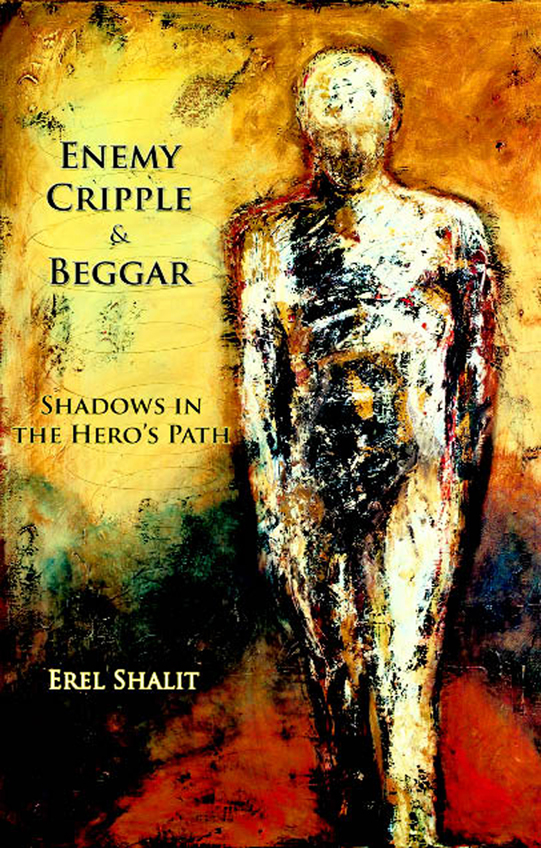
Erel Shalit was instrumental in firmly establishing Fisher King Press as a publisher of Jungian Psychology Books: Publishing Enemy, Cripple, Beggar: Shadows in the Hero’s Path in July of 2007 was the stamp of approval that brought Fisher King Press credibility in the Jungian circles and in turn so many other fine Jungian authors.

Dr. Shalit authored several Fisher King Press publications, including: The Cycle of Life: Themes and Tales of the Journey, Requiem: A Tale of Exile and Return, Enemy, Cripple, Beggar: Shadows in the Hero’s Path, The Hero and His Shadow: Psychopolitical Aspects of Myth and Reality in Israel. With Nancy Swift Furlotti, Erel co-edited, The Dream and its Amplification.

I am grateful to have been a friend of Erel Shalit, grateful to be the publisher of so many of Erel’s books, grateful for all of the love, compassion, and consciousness he has brought to the world.

Mel Mathews
Publisher, Fisher King Press
Fisher King Press publishes an eclectic mix of worthy books including Jungian Psychological Perspectives and a growing list of Cutting-Edge alternative titles. www.fisherkingpress.com

Monday, September 11, 2017

War and The Enemy in the 21st Century

One of the greatest rewards of being a publisher is in reflecting and rejoicing in the many meaningful and timely Fisher King Press publications. It truly is a privilege to be the midwife of these newborns—many of whom arrive far ahead of their time—and to witness their maturing and assimilation into the collective consciousness.

With the wars being fought on many fronts, and with the posturing and possibility of yet more, I reached for Erel Shalit’s Enemy, Cripple, Beggar: Shadows in the Hero’s Path (which we published in 2008) and have been reading from Shalit’s chapter on The Enemy, which in the beginning of the chapter, states:
On [the journey], the hero initially meets the Enemy, because the previously unrealized and unconscious dark side, the shadow, is often first encountered in projection, as carried by the enemy. 
In reference to the First World War, Jung wrote in 1916: "As events in wartime have clearly shown, our mentality is distinguished by the shameless naïveté with which we judge our enemy, and in the judgment we pronounce upon him we unwittingly reveal our own defects: we simply accuse our enemy of our own unadmitted faults." (C.G. Jung, Collected Works 8, 2nd ed., par. 516.)
The realization of the enemy shadow—whether persecuted by it, or when trying to flee or to fight it—provides a possibility of energizing the ego. In the inward process of finding one’s pain and resources, and in order to eventually find one’s way to the inner wounds that unsettle us if we do not attend to them, to find the wounded child in our soul, it is necessary to go through the projections of the shadow . . .
This is just the first few paragraphs of the chapter that explores many facets of the enemy archetype. If you have a copy of Enemy, Cripple, Beggar, I encourage you to revisit this timely publication. If you do not have a copy . . . well, here’s a link to purchase a copy of this rich and worthy book: Enemy, Cripple, Beggar.

As the publisher of Fisher King Press, I would also like to extend a heartfelt thank you to the many readers of our publications, and to our authors who have done the hard work of research, mining the depths of their inner worlds, and for bring back to us these timeless gems.
Fisher King Press publishes an eclectic mix of worthy books including Jungian Psychological Perspectives and a growing list of Cutting-Edge alternative titles. www.fisherkingpress.com

Tuesday, October 13, 2015

The Cycle of Life Goodreads Giveaway


Goodreads Book Giveaway

The Cycle of Life by Erel Shalit

The Cycle of Life

by Erel Shalit

Giveaway ends December 20, 2015.
See the giveaway details at Goodreads.
Enter Giveaway


Fisher King Press publishes an eclectic mix of worthy books including 
Jungian Psychological Perspectives, Cutting-Edge Fiction, Poetry, 
and a growing list of alternative titles. 

Saturday, July 5, 2014

On Keeping your Friends Close - Your Enemies Closer


by Erel Shalit

On his way, the hero initially meets the Enemy, because the previously unrealized and unconscious dark side, the shadow, is often first encountered in projection, as carried by the enemy.

In reference to the First World War, Jung wrote in 1916:
As events in wartime have clearly shown, our mentality is distinguished by the shameless naïveté with which we judge our enemy, and in the judgment we pronounce upon him we unwittingly reveal our own defects: we simply accuse our enemy of our own unadmitted faults. (C.G. Jung, CW 8,  quoted in Shalit's, Enemy, Cripple, Beggar)
The realization of the enemy shadow—whether persecuted by it, or when trying to flee or to fight it—provides a possibility of energizing the ego. In the inward process of finding one’s pain and resources, and in order to eventually find one’s way to the inner wounds that unsettle us if we do not attend to them, to find the wounded child in our soul, it is necessary to go through the projections of the shadow, as for instance in the following dream:
I am persecuted by a group of young children. I am really afraid, and run as quickly as I can. I then discover that I have found refuge in what looks like a concentration camp. I see that the commander is an Arab, in Nazi uniform. I try to escape, and finally I find a way out. I am really very frightened. I cross a field and come to a small village. Initially it looks friendly, but then I discover that I have been taken prisoner-of-war. Even though I am the prisoner, I am asked to treat a wounded child. The child looks angry, and I am scared, but I know this child is in pain, so I am determined to treat it.
In the following dream, which I have discussed elsewhere, the dreamer is painfully shown that there can be no ego without a shadow. Furthermore, it demonstrates how we are often awoken to encounter what lingers in the shadow, as it is projected onto the awesome enemy:
I see a small Arab boy crawling on his knees in the street, screaming in despair, ‘My hand is cut off.’ It is in the grass, some meters away from where he is crawling. At the crossroad of the street are four cut-off hands, reaching up through the asphalt. The sight is too frightening for me to approach. I don’t dare reach out a helping hand to bring his hand back to him, to the Arab boy. On the opposite side of the crossroad there is an overturned van. Underneath it, also on his knees, there is a Jewish man, dressed in a blue overall. His hands are tied together, and bandaged. It is Intifada. (Shalit, The Hero and His Shadow, p. 119.)
While the Arab boy initially is identified as the enemy, he is then recognized as the wounded one. Later the dreamer realizes that it is by this frightening encounter that he comes to see the struggling Self, the awesome sight of the four cut-off hands in the center of the crossroads.

Fisher King Press publishes an eclectic mix of worthy books including 
Jungian Psychological Perspectives, Cutting-Edge Fiction, Poetry, 
and a growing list of alternative titles. 

Wednesday, June 19, 2013

News Release: New Title Alert - The Dream and Its Amplification

June 19, 2014

Just Published by Fisher King Press:

Erel Shalit & Nancy Swift Furlotti (eds.)

The Dream and Its Amplification is now available for shipping.

Fourteen Jungian Analysts from around the world have contributed chapters to this book on areas of special interest to them in their work with dreams. This offers the seasoned dream worker as well as the novice great insight into the meaning of the dream and its amplification.

The Dream and Its Amplification unveils the language of the psyche that speaks to us in our dreams. We all dream at least 4-6 times each night yet remember very few. Those that rise to the surface of our conscious awareness beckon to be understood, like a letter addressed to us that arrives by post. Why would we not open it? The difficulty is in understanding what the dream symbols and images mean.

Through amplification, C. G. Jung formulated a method of unveiling the deeper meaning of symbolic images. This becomes particularly important when the image does not carry a personal meaning or significance and is not part of a person's everyday life.

Contents and Contributors
  • The Amplified World of Dreams - Erel Shalit and Nancy Swift Furlotti
  • Pane e’ Vino: Learning to Discern the Objective, Archetypal Nature of Dreams - Michael Conforti
  • Amplification: A Personal Narrative - Thomas Singer
  • Redeeming the Feminine: Eros and the World Soul - Nancy Qualls-Corbett
  • Wild Cats and Crowned Snakes: Archetypal Agents of Feminine Initiation - Nancy Swift Furlotti
  • A Dream in Arcadia - Christian Gaillard
  • Muse of the Moon: Poetry from the Dreamtime - Naomi Ruth Lowinsky
  • Dreaming the Face of the Earth: Myth, Culture, and Dreams of the Mayan Shaman - Kenneth Kimmel
  • Coal or Gold? The Symbolic Understanding of Alpine Legends - Gotthilf Isler
  • Sophia’s Dreaming Body: The Night Sky as Alchemical Mirror - Monika Wikmam
  • The Dream Always Follows the Mouth: Jewish Approaches to Dreaming - Henry Abramovitch
  • Bi-Polarity, Compensation, and the Transcendent Function in Dreams and Visionary Experience: A Jungian Examination of Boehme’s Mandala - Kathryn Madden
  • The Dream As Gnostic Myth - Ronald Schenk
  • Four Hands in the Crossroads: Amplification in Times of Crisis - Erel Shalit
  • Dreams and Sudden Death - Gilda Frantz
Attending the IAAP Congress in Copenhagen? - Don't miss the The Dream and Its Amplification book launch on August  21st at 19:00 !

Paperback: 230 pages (Large Page Format 9.25" x 7.5")
Publisher: Fisher King Press; 1st edition (June 15, 2013)
Language: English
ISBN-13: 978-1-926715-89-6

Fisher King Press publishes an eclectic mix of worthy books including 
Jungian Psychological Perspectives, Cutting-Edge Fiction, Poetry, 
and a growing list of alternative titles. 

Tuesday, April 30, 2013

Live the Journey: From Predetermined Fate to Individual Destiny


by Erel Shalit

Jung defines life as the “story of the self-realization of the unconscious. Everything in the unconscious seeks outward manifestation, and the personality too desires to evolve out of its unconscious conditions to experience itself as a whole.” (Memories, Dreams, Reflections, p. 3.)

The Cycle of Life describes some of the principal archetypal images at play as we navigate our journey through life. In each stage of life, there is an image, or rather a cluster of psychological themes that pertain to that particular period, such as the divine child and the orphan child. Usually, these themes and images do not correspond to actual events or traumata, but reflect internal, archetypal experiences.

The feelings related to being an orphan are universal, and a vital facet of growing out of certain states of childhood; sometimes, however, the archetypal image of the orphan may devastatingly strike a child by the traumatic loss of a parent. Traumatic experiences often cause fixation; the archetypal image becomes frozen in the psyche of the traumatized person, rather than serving as a transitory psychic constellation, eventually integrating into the fullness of the personality.

At times we might find ourselves struck by the disparity between a predominant archetypal image and the prevailing developmental stage, as for instance when we see a senex-child, that is, a child who seems to speak the old person’s tongue, rather than to be dwelling in the world of childhood play. Or, for example, a mother of four teenage children, all of whom thought of her as a ‘child-mother,’ immature and childish. Even when they were small, they felt that she wanted them to be parental children taking care of her.

The archetypal idea of a journey through life is outlined in The Cycle of Life, in which Jung’s theory of the stages of life, as well as other perspectives, are reviewed. A focus on the river of life as an image of the journey helps to illustrate the process of transformation from predetermined fate to individual destiny. Hermes, god of thieves and merchants, souls and roads, will guide us toward the Hermetic aspect of life’s journey, infusing the experience of life with meaning, when graced with those soulful gifts that alter life’s course.

Erel Shalit is a Jungian psychoanalyst in Ra’anana, Israel. He is the author of several publications, including Enemy, Cripple, Beggar: Shadows in the Hero’s Path, The Hero and His Shadow: Psychopolitical Aspects of Myth and Reality in Israel, The Complex: Path of Transformation from Archetype to Ego, and Requiem: A Tale of Exile and Return. Dr. Shalit lectures at professional institutes, universities, and cultural forums in Israel, Europe, and the United States.
Fisher King Press publishes an eclectic mix of worthy books including 
Jungian Psychological Perspectives, Cutting-Edge Fiction, Poetry, 
and a growing list of alternative titles. 

Wednesday, December 26, 2012

The New Year and Jung’s Stages of Life

by Erel Shalit

C.G. Jung introduced the idea of studying and defining the goals of the second half of life. Daniel Levinson thus considered him “the father of the modern study of adult development.”[1]

Jung originally published his essay ‘The Stages of Life’ in 1930,[2] about twenty years before Erikson drew his epigenetic chart of psychosocial development. Jung emphasized the contrary directions of man’s focus during the first and second halves of life. Whereas in the first part of life, the development of a firm ego that takes its foothold in the world predominates, in the second part of life, the individual must turn toward Self and spirit.

‘The Stages of Life’ appeared in 1933 in Jung’s book Modern Man in Search of a Soul. It had initially been published as ‘Die seelische Probleme der menschlichen Alterstufen’ in Neue Zürcher Zeitung in 1930, but was later revised. His ideas regarding the stages of life will be our point of departure and guiding light throughout our discourse.

When Jung set out to “discuss the problems connected with the stages of life,” he devoted several pages of this brief essay to discuss the notion of problem. He claims that problem is the kernel of culture and consciousness. “There are no problems without consciousness,” says Jung. Confronting a problem instigates toward consciousness, and due to the development of consciousness, problems come into existence.[3] Furthermore, Jung emphasizes the psychological truth that serious problems can never be fully resolved—if they appear to be, then “something has been lost.” The meaning as well as the purpose of problems lie not in their solution but, rather, in being constantly worked on.[4] Similarly, happiness and welfare do not lie in wait to be found at the end of the rainbow, but are aspects of the process and of our attitude, with sadness and misery appropriate company at times of pain, difficulty and loss. The journey entails both the road we take and how we take that road, our conscious attitude.

Unmistakably, Jung’s conceptualization of the stages of life pertains to living the conscious life.

The first stage of life concerns the child’s evolving consciousness, which is based on perceiving the connection between different psychic contents. However, lacking a continuous memory in early childhood, consciousness is sporadic, rather like “single lamps or lighted objects in the far-flung darkness.”[5] Only when there is continuity of ego-memories does the ego-complex constellate, with a budding sense of subjective identity, whereby the child comes to speak of itself in first person.

Problems arise, says Jung, with the psychic birth and “conscious differentiation from the parents” in puberty.[6] This is not only an external process. By internalization, the external limitations become internal divisions, for instance, between opposing impulses. That is, the rise of consciousness both creates and is the result of an inner division between the ego and the perceived other—whether that other is an internal instinct or an external object, an autonomous complex detracting energy from the ego, or a split-off shadow.

The period of youth entails the transition from what Jung considers to be the dream of an essentially problem-free childhood to the harsh demands of life. The problem may be external, due, for instance, to “exaggerated expectations, underestimation of difficulties, unjustified optimism, or a negative attitude.” Nevertheless, problems unmistakably may arise, as well, from internal conflicts and disturbances in the psychic equilibrium; Jung mentions the sexual instinct and feelings of inferiority.[7]

It is in youth, says Jung, that the individual needs to recognize and accept “what is different and strange as a part of his own life,” in spite of the desire to cling “to the childhood level of consciousness,”[8] that is, a wish to avoid unpleasure, and to regress into a conflict-free existence.[9]

Achievement and usefulness, says Jung, “are the lodestars that guide us … to strike our roots in the world,” to find a place in society, which is essential in the first half of life. Development of a wider consciousness, “which we give the name of culture,”[10] is left, however, for a later stage in life. Therefore, while the child struggles to shape its individual ego, the aim in youth—or young adulthood—is to gain a place in society.

Jung’s main concern as expressed in this essay is the arrival at midlife. “The social goal,” he says, “is attained only at the cost of a diminution of personality. Many—far too many—aspects of life which should also have been experienced lie in the lumber-room among dusty memories; but sometimes, too, they are glowing coals under grey ashes.”[11]

Jung notes that around the age of forty, a slow process of character-change takes place. Interests and inclinations alter. Simultaneously, however, moral principles tend to harden and grow rigid, “as if the existence of these principles were endangered and it were therefore necessary to emphasize them all the more.”[12]

Jung ascribed the neurotic disturbances of adults to the common desire to prolong youth, and a reticence to crossing the threshold into maturity. The neurotic is someone “who can never have things as he would like them in the present.”[13] Typically, the neurotic person projects the cause of his suffering onto the past or the future, and we often hear him or her say, “if only this or that would/would not have happened,” or “if only … then …” The cult of youth and the widespread difficulty of accepting old age, typify the pathology of our era.

The fear of midlife is not of death, claims Jung, but of the sun’s descent, which means “the reversal of all the ideals and values that were cherished in the morning. … The sun ... draw[s] in its rays instead of emitting them. Light and warmth decline and are at last extinguished.”[14]

However, it seems to me that ultimately the fishing rod of midlife fears does indeed dip into the lake of death, when light and warmth are extinguished. This, then, may be compensated by, for instance, what for many may be a reassuring faith and belief in existence after death, or, alternatively, the ambition to live a meaningful life. In his essay ‘The Soul and Death,’ published in 1934, Jung does state that,
From the middle of life onward, only he remains vitally alive who is ready to die with life. For in the secret hour of life’s midday the parabola is reversed, death is born. The second half of life does not signify ascent, unfolding, increase, exuberance, but death, since the end is its goal.[15]
The challenge in midlife is to come to terms with hitherto neglected features, sometimes conflicting with one’s conscious attitude and recognized values. Jung mentions, as well, how bodily characteristics of the opposite sex can be discerned in the older person.

The psychological and biological changes that a person undergoes in the second half of life may thus blur the distinction between male and female traits, though this may be a far cry from the erotic character of juvenile androgyny. Consequently, the man must now put his feminine substance to use, and, says Jung, the woman “her hitherto unused supply of masculinity.”[16] According to Jung’s Weltanschauung, certainly influenced by the Zeitgeist, the spirit of his time, he associated the masculine with logos and the feminine with Eros.

Thus, in midlife it may happen that “the husband discovers his tender feelings and the wife her sharpness of mind.”[17] These changes are dramatic and, says Jung, may lead to marital catastrophe. If so, I suppose that the wife’s sharpness of mind may be more threatening to the man, than showing his tender feelings would pose a danger to his wife.[18]

Jung expressed the essence of midlife transition beautifully when he says that, “what was great in the morning will be little at evening, and what in the morning was true will at evening have become a lie.”[19]

In the second half of life, man must withdraw from external preoccupations, and seriously prepare for old age, death and eternity—which amounts to a (not necessarily formal) religious attitude. “An old man who cannot bid farewell to life appears as feeble and sickly as a young man who is unable to embrace it,” says Jung sharply and poetically.[20] Rhetorically he wonders if not culture, beyond the nature to which family and children pertain, is the “meaning and purpose of the second half of life.”[21]

To sum up, Jung’s ideas on the stages of life pertain to the development of consciousness as it manifests in the life cycle. The essence lies in the problem that faces the individual at each stage; a problem less to be resolved, but rather to be confronted and challenged. Jung thus emphasizes life as a process of becoming conscious, which transforms the experience of life into a living experience.

As the individual traverses the arc of life, he or she may be resistant to the problems posed by each transition, such as an expanding ego consciousness; striking roots in society; confronting the decline and integrating the opposites, including those of gender; and then death and eternity. Jung says that, “the art of life is the most distinguished and rarest of all the arts.”[22] For some travelers along the journey of life, the art of life becomes increasingly conceptual, for others more and more esthetic; for some minimalistic, for others increasingly abstract.

The second half of life should not merely be a repetition of one’s youth and young adulthood, but rather a period that enables integration by accentuating those matters of one’s psyche that have not been taken care of well enough.

Jung divides life into four parts. The Cycle of Life: Themes and Tales of the Journey elaborates on the respective stages less from a developmental perspective, but rather as an effort to extract the archetypal images at the core of each age.

[1]  The Seasons of a Man’s Life, p. 4.
[2] Carl Gustav Jung, The Collected Works of C. G. Jung, vol. 8, par. 749-795. NOTE: CW refers throughout to The Collected Works of C. G. Jung.
[3]  CW 8, par. 750, 754.
[4]  CW 8, par. 770.
[5]  CW 8, par. 755.
[6]  CW 8, par. 756.
[7]  CW 8, par. 761, 762.
[8]  CW 8, par. 764.
[9]  Cf. Sigmund Freud, Beyond the Pleasure Principle, SE 18. The word unpleasure is “used to translate the German ‘Unlust,’ the pain or discomfort of instinctual tension, as opposed to ‘Schmertz,’ the sensation of pain. The pleasure principle is correctly the pleasure-unpleasure principle.” (Charles Rycroft, A Critical Dictionary of Psychoanalysis, p. 174).
[10]  CW 8, par. 769.
[11]  CW 8, par. 772.
[12]  CW 8, par. 773.
[13]  CW 8, par. 776.
[14]  CW 8, par. 778.
[15]  CW 8, par. 800.
[16]  CW 8, par. 782.
[17]  CW 8, par. 783.
[18]  As in some other instances, Jung’s formulation here is quite archaic. Sharpness of mind is not egodystonic to women, whether young or old. Also, many a young man today need not wait till midlife to expose his tender feelings.
[19]  CW 8, par. 784.
[20]  CW 8, par. 792.
[21]  CW 8, par. 787.
[22]  CW 8, par. 789.


Fisher King Press publishes an eclectic mix of worthy books including 
Jungian Psychological Perspectives, Cutting-Edge Fiction, Poetry, 
and a growing list of alternative titles. 

Saturday, December 17, 2011

Myth and Reality in Israel


Just Published by Fisher King Press

The Hero and His Shadow:  
Psychopolitical Aspects of Myth and Reality in Israel
Revised Edition - ISBN 9781926715698
By Erel Shalit

In an era in which all seemed to dwell in the self-imposed solitary confinement of virtual reality, life in vitro behind the screen, the young take to the streets and gather in the squares. Attempting to break the bonds of oppressive regimes and cold-hearted mammonism, they have raised their voice across the globe, demanding freedom, solidarity, and justice. Will these voices persevere to withstand the strong, silencing forces of darkness, of ruthlessness and oppression? Will the Voice of Wisdom be listened to, so that we may “dwell safely, without fear of evil.” (Prov. 1:33)

The Hero and His Shadow: Psychopolitical Aspects of Myth and Reality in Israel introduces a psychological perspective on the history, development, and myths of modern Israel.

The realization of Zionism relied on the pioneer, who revolted against the Way of the Father and sought spiritual redemption through the revival of Mother Earth in the ancient land. Myth and history, psyche and matter are constantly intertwined in the birth and development of Israel, for example when in the Declaration of Independence we are told that pioneers make deserts bloom, the text actually says they make spirits blossom.

Pioneer, guardsman and then warrior were admired hero-ideals. However, in the shadow of the hero and the guiding myths of revolt, redemption, strength and identity-change, are feelings of despair, doubt, weakness and fear.  Within renewal, lurks the threat of annihilation.

Suppressed aspects of past and present myths, which linger in the shadow, are exposed. Psychological consequences of Israel’s wars, from independence to the present war of terror, are explored on a personal note and from a psychoanalytic perspective. Shadow aspects of the conflicting guiding myths Peace and Greater Israel are examined, as well as mythical connections, such as between Jerusalem and the respective archetypal images of Wholeness and Satan.

Erel Shalit is a Jungian psychoanalyst in Ra’anana, Israel. He is the author of several publications, including Enemy, Cripple, Beggar: Shadows in the Hero’s Path, The Cycle of Life: Themes and Tales of the Journey, The Complex: Path of Transformation from Archetype to Ego, and Requiem: A Tale of Exile and Return. Dr. Shalit lectures at professional institutes, universities, and cultural forums in Israel, Europe, and the United States.

Product Details
Paperback: 208 pages
Publisher: Fisher King Press; Revised edition (January 1, 2012)
Language: English
ISBN: 978-1926715698
Fisher King Press publishes an eclectic mix of worthy books including Jungian Psychological Perspectives, Cutting-Edge Fiction, and a growing list of alternative titles.
    • International Shipping.
    • Credit Cards Accepted.
    • Phone Orders Welcomed +1-831-238-7799 skype: fisher_king_press

    Friday, December 2, 2011

    A Cyclic Perspective

    In his “Commentary on The Secret of the Golden Flower,” Jung writes, “Everything of which we are conscious is an image, and that image is psyche.” He then continues, “the psyche is a world in which the ego is contained.”

    This statement reflects Jung’s cyclic perspective, as well as the centrality of the image in Analytical Psychology. It is not an ego-psychology; the world of the psyche does not reside in the ego; rather, what we call ego is contained in a world we call psyche. The Jungian approach to man’s psyche is situated at the edge between consciousness and the unconscious—never fully established on the empirical ground of ego-reality, its natural habitat is on mountainous myths, or wandering off into fairy tale forests.

    For the same reason, Jungian psychoanalysis has many names, reflecting Hermetic movement rather than Apollonian authority, and the elusive images of the soul take the place of the well-defined mechanisms of the mind.

    The hero serves as an image of that aspect of our ego that ventures into the unknown land of shadows, for instance in our dreams at night, to trace its treasures and bring them home to consciousness.

    The images of enemy, cripple, and beggar, convey three essential layers of the shadow–the image that Jung chose to describe the unconscious, repressed or unrecognized aspects of the personality, or, as he distinctly defined the shadow, “the thing a person has no wish to be.”

    These images are primarily intended to reflect the matter and fluidity of soul, rather than providing empirical structures and systematic definitions; I hope they facilitate weaving the story of the hero’s journey into the soul and the shadow.

    As we follow in the footsteps of the hero on his (or her) path or way, we shall meet the shadows that the hero (whether in masculine or feminine dress) necessarily encounters.(1)

    Were the hero to believe he already knows all there is to know, and if he would insist on standing on the firm ground of principles and conventions, he would seldom bother to respond to the call to adventure.(2) Our hero would remain at home, seated like Archie Bunker in the confined and drowsy embrace of the armchair-ego. He would stay away from the unknown, unaware of moonlit nights, and intolerant of the shadow-carrying Other. “The usual person is more than content, he is even proud, to remain within the indicated bounds…,” says Campbell.(3) “The hero,” says Jung beautifully, “is the symbolical exponent of the movement of libido.”(4)

    The hero who searches for new paths in his heart and soul often lets hints and hunches guide him forward. Yet, he also needs to be equipped with courage to search beyond the boundaries of common ground and with humbleness towards the unknown that lies ahead of him. He must also carry a bagful of questions and concerns, curiosity and conflict, doubt and fear; “Every man hath the right to doubt his task, and to forsake it from time to time; but what he must not do is forget it.”(5)

    The hero ventures into the shadow-land, far away from home, beyond the familiar security of ego-boundaries. Or perhaps the shadow is not a land, but an entire continent, with many different landscapes—fields and valleys, seas and forests, some quite recognizable, others remote and mysterious, some seemingly friendly and embracing, others hostile and intimidating. The forests may become increasingly dense and dark, the sea so wild and stormy that it carries one away, “far from native lands,” to the point where one may contemplate “whether to cast myself out of the ship into the sea and perish there, or ... to endure and bide among the living.”(6) Some of those in shadow-land are easily recognized as foes we loathe. Yet, often envy, pride, greed, anger, and lust are found in friends whom we’d never believe could possess such qualities—or even more, we discover these universal patterns, those “deadly sins” within ourselves. There are also warriors and cripples, the homeless and vagabonds, and some of awe-inspiring stature. 

    The land of shadows holds both the chains and the treasure-house of our ancestors, as well as the prospects and the promises, the fears, anxieties and uncertainty about our offspring. It pertains to the shadows we cast onto our enemy so that we may fight him—yes, usually him—in order to gain a sense of a free and secure personal identity. And it is the crippling sense of complexes that we may try to dump on the dunghill, outside and away from the central city square and the walls of our ‘ego-state,’ only to be terrified as they stare back at us when we try to gain a moment’s rest. And there, further down the murky path, stands the beggar as if faceless, without the social mask of the persona, lurking in the misty shadow at the gateway to the Self. 

    This articles is from the introduction Enemy, Cripple, Beggar by Erel Shalit

    In addition to Erel Shalit's most recent publication: The Cycle of Life: Themes and Tales of the Journey, his popular book Enemy, Cripple, Beggar: Shadows in the Hero’s Path, are available in both printed and eBook editions and can be ordered from the Fisher King Press Online Bookstore and from a host of international booksellers, including Amazon (.com, .ca, co.uk, .fr, .de) in printed and kindle editions), Barnes & Noble (printed and nook editions), and all international Apple iBookstores.


    Fisher King Press publishes an eclectic mix of worthy books including Jungian Psychological Perspectives, Cutting-Edge Fiction, and a growing list of alternative titles.

    Sunday, September 25, 2011

    News Release: The Cycle of Life

    With Great Pleasure, Fisher King Press presents another fine Jungian publication by Erel Shalit.

    The Cycle of Life: Themes and Tales of the Journey

    “The art of life is the most distinguished and rarest of all the arts.”  
    —C.G. Jung, CW 8, par. 789.

    The Cycle of Life explores the patterns that unfold over the course of our lives, as we set out to find our place in the world, in our efforts to live authentically, and in our search for home—that place within ourselves that can so easily be neglected or disregarded in this fast-paced modern world.

    In the first half of life, the task of the young traveler is to depart from home, to adventure out into the world to find his or her own individual path. However, in the second half, we find ourselves on what often amounts to a very long journey in search of Home. In many a tale, the hero, for instance Gilgamesh, sets off on his road to find life’s elixir, while other stories, such as the Odyssey, revolve around the hero’s long and arduous journey home. Many are also familiar with the journey of Dante, who at the very beginning of his Divine Comedy finds himself “Midway along the journey of our life.”

    The archetypal journey of life is constantly reenacted in the never-ending process of individuation. We find ourselves returning to this venture repeatedly, every night, as we set out on our voyage into the landscape of our unconscious. Many dreams begin by being on the way, for instance: I am on my way to … I am driving on a road that leads into the desert … I am walking through one room after the other in a long corridor-like building … I am walking towards my office, but it looks different than in reality … I walk on the pavement and on the opposite side of the street someone seems to be following me … I go down into an underground parking … I am in my car, but someone I don’t know is driving,” or, I have to go to the place from where I came …

    Download a Free Preview

    Erel Shalit is a Jungian psychoanalyst in Ra’anana, Israel. He is the author of several publications, including Enemy, Cripple, Beggar: Shadows in the Hero’s Path, The Hero and His Shadow: Psychopolitical Aspects of Myth and Reality in Israel, The Complex: Path of Transformation from Archetype to Ego, and Requiem: A Tale of Exile and Return. Dr. Shalit lectures at professional institutes, universities, and cultural forums in Israel, Europe, and the United States.

    Product Details
    Paperback: 200 pages
    Publisher: Fisher King Press
    First edition (Sept 2011)
    Language: English
    ISBN-10: 1926715500
    ISBN-13: 978-1926715506
    Fisher King Press publishes an eclectic mix of worthy books including Jungian Psychological Perspectives, Cutting-Edge Fiction, and a growing list of alternative titles.
      • International Shipping.
      • Credit Cards Accepted.
      • Phone Orders Welcomed: +1-831-238-7799 skype: fisher_king_press