Showing posts with label war. Show all posts

Monday, September 11, 2017

War and The Enemy in the 21st Century

One of the greatest rewards of being a publisher is in reflecting and rejoicing in the many meaningful and timely Fisher King Press publications. It truly is a privilege to be the midwife of these newborns—many of whom arrive far ahead of their time—and to witness their maturing and assimilation into the collective consciousness.

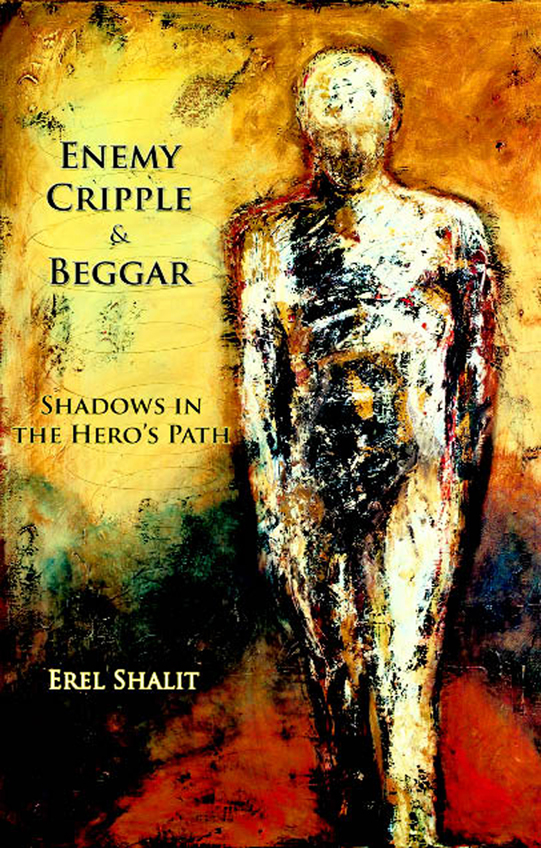
With the wars being fought on many fronts, and with the posturing and possibility of yet more, I reached for Erel Shalit’s Enemy, Cripple, Beggar: Shadows in the Hero’s Path (which we published in 2008) and have been reading from Shalit’s chapter on The Enemy, which in the beginning of the chapter, states:
On [the journey], the hero initially meets the Enemy, because the previously unrealized and unconscious dark side, the shadow, is often first encountered in projection, as carried by the enemy. 
In reference to the First World War, Jung wrote in 1916: "As events in wartime have clearly shown, our mentality is distinguished by the shameless naïveté with which we judge our enemy, and in the judgment we pronounce upon him we unwittingly reveal our own defects: we simply accuse our enemy of our own unadmitted faults." (C.G. Jung, Collected Works 8, 2nd ed., par. 516.)
The realization of the enemy shadow—whether persecuted by it, or when trying to flee or to fight it—provides a possibility of energizing the ego. In the inward process of finding one’s pain and resources, and in order to eventually find one’s way to the inner wounds that unsettle us if we do not attend to them, to find the wounded child in our soul, it is necessary to go through the projections of the shadow . . .
This is just the first few paragraphs of the chapter that explores many facets of the enemy archetype. If you have a copy of Enemy, Cripple, Beggar, I encourage you to revisit this timely publication. If you do not have a copy . . . well, here’s a link to purchase a copy of this rich and worthy book: Enemy, Cripple, Beggar.

As the publisher of Fisher King Press, I would also like to extend a heartfelt thank you to the many readers of our publications, and to our authors who have done the hard work of research, mining the depths of their inner worlds, and for bring back to us these timeless gems.
Fisher King Press publishes an eclectic mix of worthy books including Jungian Psychological Perspectives and a growing list of Cutting-Edge alternative titles. www.fisherkingpress.com

Saturday, July 5, 2014

On Keeping your Friends Close - Your Enemies Closer


by Erel Shalit

On his way, the hero initially meets the Enemy, because the previously unrealized and unconscious dark side, the shadow, is often first encountered in projection, as carried by the enemy.

In reference to the First World War, Jung wrote in 1916:
As events in wartime have clearly shown, our mentality is distinguished by the shameless naïveté with which we judge our enemy, and in the judgment we pronounce upon him we unwittingly reveal our own defects: we simply accuse our enemy of our own unadmitted faults. (C.G. Jung, CW 8,  quoted in Shalit's, Enemy, Cripple, Beggar)
The realization of the enemy shadow—whether persecuted by it, or when trying to flee or to fight it—provides a possibility of energizing the ego. In the inward process of finding one’s pain and resources, and in order to eventually find one’s way to the inner wounds that unsettle us if we do not attend to them, to find the wounded child in our soul, it is necessary to go through the projections of the shadow, as for instance in the following dream:
I am persecuted by a group of young children. I am really afraid, and run as quickly as I can. I then discover that I have found refuge in what looks like a concentration camp. I see that the commander is an Arab, in Nazi uniform. I try to escape, and finally I find a way out. I am really very frightened. I cross a field and come to a small village. Initially it looks friendly, but then I discover that I have been taken prisoner-of-war. Even though I am the prisoner, I am asked to treat a wounded child. The child looks angry, and I am scared, but I know this child is in pain, so I am determined to treat it.
In the following dream, which I have discussed elsewhere, the dreamer is painfully shown that there can be no ego without a shadow. Furthermore, it demonstrates how we are often awoken to encounter what lingers in the shadow, as it is projected onto the awesome enemy:
I see a small Arab boy crawling on his knees in the street, screaming in despair, ‘My hand is cut off.’ It is in the grass, some meters away from where he is crawling. At the crossroad of the street are four cut-off hands, reaching up through the asphalt. The sight is too frightening for me to approach. I don’t dare reach out a helping hand to bring his hand back to him, to the Arab boy. On the opposite side of the crossroad there is an overturned van. Underneath it, also on his knees, there is a Jewish man, dressed in a blue overall. His hands are tied together, and bandaged. It is Intifada. (Shalit, The Hero and His Shadow, p. 119.)
While the Arab boy initially is identified as the enemy, he is then recognized as the wounded one. Later the dreamer realizes that it is by this frightening encounter that he comes to see the struggling Self, the awesome sight of the four cut-off hands in the center of the crossroads.

Fisher King Press publishes an eclectic mix of worthy books including 
Jungian Psychological Perspectives, Cutting-Edge Fiction, Poetry, 
and a growing list of alternative titles.