
by Laura Sentineri Harness
Mythopoetry Scholar Annual eZine vol. 3. Stephanie Pope, Editor. Fountain Hills: mythopoetry.com, January 2, 2012 (© 2012)
 Deep Blues: Human Soundscapes for the Archetypal Journey
Publisher: Fisher King Press
September 1, 2011 1st edition
140 pages, Illustrations, Index, Bibliography
ISBN-10: 1926715527
ISBN-13: 978-1926715520
In the midnight hours, long ‘fore the break of day
When the blues creep on you and carry your mind away
-Leroy Carr, Midnight Blues1
What Is It About “The Blues” That So Deeply Stirs The Soul?
In Deep Blues: Human Soundscapes for the Archetypal Journey, Jungian psychoanalyst, Mark Winborn brings the astute lens of depth psychology to this question, exploring “Blues” music as a psychological, archetypal and cultural phenomenon. The strength of this book is its ability to cross between two vastly different worlds juxtaposing the gritty emotions and simple earthy lyrics of the Blues with the expansive intellectual framework of Jungian Psychology.
Winborn’s brilliant analytical skills and personal passion for the subject is evident and this book often reads like a love story to the muse of the Blues. Although the genre of Blues music is his focus, there is a breadth to his writing that distills many valuable insights into human nature. Winborn applies a variety of Jungian analytic theories as well as elaborates upon the interface of creativity and alchemy, the shamanic role of a “Blues” performer and Neumann’s theory of Unitary Reality.2 Deep Blues is a poignant testimony to the power of Blues music to heal and redeem the “midnight hour” sufferings of the soul.
Tracing the origins of the Blues to slavery and the African-American experience of devastating loss, tragedy, trauma and personal pain, Winborn calls the Blues “survival music.” He then gives a brilliant in-depth analysis of the healing, medicinal qualities inherent in Blues music which contribute to emotional resilience, redemption and restoration of wholeness.
Music has long been used to help people deal with their emotions. In the 17th century the scholar, Robert Burton's The Anatomy of Melancholy3 argued that music was critical in treating mental illness especially melancholia. He noted that music has an "excellent power ...to expel many other diseases" and he called it "a sovereign remedy against despair and melancholy."4 Back before Prozac and Zoloft music was prescriptive, often used as a homeopathic remedy as “like cures like.”
Simply Stated, If You’ve Got “The Blues,” Play Them
I merely took the energy it takes to pout and wrote some Blues.
-Duke Ellington5, US jazz bandleader, musician, & songwriter (1899 - 1974)
Listening to, singing, writing and playing the Blues facilitates a release and deepening into the murky emotional aspects of life and helps us to integrate the dark, split off, unconscious aspects of the archetypal shadow in both the personal and collective psyche. As Winborn illustrates, Blues music is an excellent depictation of the alchemical process of psychological transmutation. Through the telling of one’s personal story, the narrative of life’s tragic aspects and the cathartic action of putting strong feelings into song “the prima materia of everyday life becomes the gold of unitary reality.”6 The experience of unitary reality is “a reciprocal coordination between world and psyche”7 and Winborn illustrates how music and the Arts have the power to invoke this expanded consciousness of oneness which transcends polarities, divisions and limitations of time and space. As we listen to the Blues we have the opportunity to emotionally empathize and resonate with archetypal themes of longing, grief, hope, and abandonment, connecting us to what’s universal and meaningful in our common struggles.
Because Blues music often deals with shadow themes it can help us to develop non-polarized attitudes towards human suffering, bringing acceptance and transcendence. In Winborn’s words, “Ultimately, the blues has an innate healing potential: it is a form of therapy which incorporates elements of humor, alchemical imagination, personification and the narrative impulse.”8 As a music therapist I’ve witnessed firsthand how music, specifically the Blues, can provide healing support to people who are vulnerable, disempowered or socially marginalized.
In psychiatric hospitals, nursing homes, pediatric cancer wards, or programs for the developmentally disabled this music has a powerful way of meeting people in the trenches of the deepest, darkest experiences that life brings. Blues music is direct, emotional, and above all, accessible. To write a Blues song we can simply start with the question “What’s bothering you today?” Raw, heartfelt lyrics flow easily into the reassuring form of the 12 bar blues where even the most challenging and overwhelming emotions are contained, accepted, validated and transformed.
In the final chapter “Imaging the Blues,” Winborn encourages us to listen with an active imagination approach, allowing the music to evoke feelings, images, and memories which emerge from the unconscious. At this point it would have been helpful to clarify the role of Music Therapy in the prescribed use of music as a therapeutic catalyst vs. music as therapy, the awareness that music is intrinsically therapeutic. There is great potential for interface with the field of Music Therapy since Blues music is widely used in clinical settings with great therapeutic success. Winborn’s depth psychological perspective lends itself to further inquiry into practical applications in the field of Music Therapy as well as the interface between Depth Psychology and the Creative Arts Therapies.
An Antidote For Rationalism?
Is Blues music an antidote to Western society’s tendency to intellectualize, compartmentalize and defend against emotions? Winborn makes a good argument for this and illustrates how the Blues can deepen and expand our emotional vocabulary via universal acoustic images that speak to the heart. The musical elements of rhythm, timbre, and vocal tone create a physiological response which overrides the mental and ego defenses and gets underneath our skin. The instinctual, visceral, emotional energy of the Blues is the shadow of Western classical music idioms and provides a means for reckoning with both our collective and personal shadow.9
Paradoxically the Blues helps us to both accept and transcend painful emotions since Blues lyrics are often laced with humor, wisdom, signification and elements of the trickster archetype. Winborn provides an excellent analysis of how the Blues-man performer can play a shamanic role as a catalyst for transformation in the listener, encouraging us to accept the reality of human misery and hear the Blues as a “joyful participation in the sorrows of the world.”10
Deep Blues is well crafted with research in the areas of music history, aesthetics, philosophy, and depth psychology. Got the blues? Deep Blues infuses the midnight hour with meaning and provides the reader with a homeopathic remedy for what ails the soul.
notes
1 American “blues” singer, songwriter, pianist, see http://www.elijahwald.com/carrtimes.html
2 Neumann states, “The archetype always refers to a unitary reality embracing world and psyche.” See The Journal of Analytic Psychology, Vol. 4, Issue 2, 1959, p.126.
3 Burton, Robert and Gass, William H., New York: NYBR, 2001.
4 Ibid. p.117.
6 p. 66.
7 Neumann states, “The archetype always refers to a unitary reality embracing world and psyche.” See The Journal of Analytic Psychology, Vol. 4, Issue 2, 1959, p.126.
8 p.7
9 p. 11. Shadow- “Hidden or unconscious aspects of oneself, both good and bad, which the ego has repressed or never recognized.” (Sharp, Jung Lexicon)
10 p.21.
Reviewer Bio
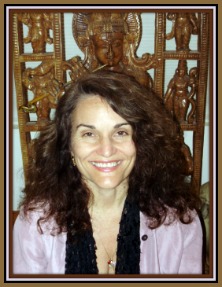 Laura Sentineri Harness, MA, MT-BC has a Masters degree in Integral Counseling Psychology from the California Institute of Integral Studies and a Bachelor’s degree in Music Therapy from Arizona State University. She has worked as a Board Certified Music Therapist for over 25 years, using music and expressive arts therapies in a variety of clinical settings. She is currently a Jungian oriented therapist in private practice and is the director of Sedona Music Therapy Services, a state funded agency which provides Music Therapy services to the developmentally disabled throughout northern Arizona. Laura plays the guitar, piano, harp and harmonium and writes songs and poems, many of them inspired by her dreams and inner work. She lives in Sedona, Arizona where she and her husband are co-directors of Temenos Healing Arts Center and they lead personalized, mythic retreats in the majestic beauty of Sedona’s red rock cathedrals.
Fisher King Press publishes an eclectic mix of worthy books includingJungian Psychological Perspectives, Cutting-Edge Fiction, Poetry,and a growing list of alternative titles.


 came together from that interest as well as a fascination and curiosity about how music functions both as an agent of healing and as a medium that touches areas of the psyche that words cannot. Realising that they could not themselves cover such a vast subject in the depth that they wanted to, they invited authors with differing interests and backgrounds to participate in the project by submitting essays on any aspect of music that gripped them at the time of writing.