by V. Walter Odajnyk, Author of
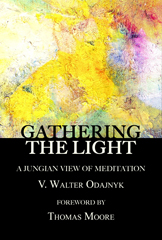
Gathering the Light: A Jungian View of Meditation
At the beginning of the Christian era, the entire Mediterranean world was caught up in the throes of a spiritual ferment-not unlike that of our day. The Roman Empire had completed the eastward expansion begun by Alexander the Great and brought together the ancient cultures of the Near East and the younger cultures of the West. A cosmopolitan, secular, Hellenic civilization and a common language unified the entire region. The various indigenous traditional religions lost their hold on the religious feelings of their adherents. A merging of the gods and cults of different regions took place, and something like our New Age movement developed. That movement combined Oriental mythologies, astrology, Iranian theology, elements of Jewish biblical and occult traditions, Christian salvation eschatology, the mystery religions of Isis, Mithras, and Attis, Platonic terms and concepts, and alchemical imagery. Christianity itself was only one among many new religions of the time that held a radically dualistic view of the nature of reality along with an otherworldly goal of salvation. In ancient Rome, as in the United States today, every conceivable religion was represented, and many people wandered from sect to sect in search of novelty and transcendent I experience. It was even possible to travel to India and China in that quest.
Today, the religions of East and West have met once again. One of the significant results of that encounter is a renewed interest in meditation. I say "renewed" because meditation is not new to the West. Both Christianity and Judaism have a rich contemplative tradition. But beginning with the Renaissance, that tradition slowly began to recede as Europeans turned their attention toward the outer world-exploring the newly discovered American continent, studying different cultures, and pursuing an objective inquiry into nature. Thus, when the Eastern religions gained popularity in the West during the late 1960s and early 1970S, many Christians and Jews initially encountered meditation through Eastern teachings. Daniel Goleman, in the introduction to his book
The Meditative Mind, describes the situation at the time. He states rather, meditation in the West had disappeared from common religious practice.) Goleman became intensely interested in meditation and as a graduate student in psychology went to Asia to study the meditative traditions in their original setting. He writes:
Those of us who were drawn to the meditation teachings of the East were confronted by a panoply of techniques, schools, traditions, and lineages. Suddenly we heard talk of strange states of consciousness and exotic states of being-"samadhi" and "satori," Boddhisattvas and tulkus.
It was new and unfamiliar terrain to us. We needed a Baedeker, a traveler's guide to this topography of the spirit. I wrote Varieties as such a guide, an overview of the major meditative traditions that were then finding so many eager students....
Now, more than a decade later, things have changed. Meditation has infiltrated our culture. Millions of Americans have tried meditation, and many have incorporated it into their busy lives. Meditation is now a standard tool used in medicine, psychology, education, and self-development.... People meditate at work to enhance their effectiveness; psychotherapists and physicians teach it to their patients; and graduate students write theses about it. (1)
During the 1970s, and even more so today, a good number of believing Jews and Christians who were exposed to Eastern meditation began to look to their own traditions to rediscover and revitalize the practice of meditation in a Christian or Jewish context. Rabbi Aryeh Kaplan, for example, made such an attempt with his book
Meditation and the Bible, published in 1978. In a later book,
Jewish Meditation, he noted that “as many as 75 percent of the devotees in some ashrams are Jewish and large percentages follow disciplines such as Transcendental Meditation. When I speak to these Jews and ask them why they are exploring other religions instead of their own, they answer that they know of nothing deep or spiritually satisfying in Judaism. When I tell them there is a strong tradition of meditation and mysticism, not only in Judaism, but in mainstream Judaism, they look at me askance.”(2)
Nevertheless, Kaplan admitted that even many rabbis and scholars were not aware that such a tradition exists. For since the Enlightenment, reference to meditation disappeared from mainstream Jewish literature, and even from Chasidic literature, where it once played a central role. Kaplan had to undertake a difficult scholarly task to rediscover the tradition of Jewish meditation, for most of the important texts on Jewish meditation had never been published and existed only in manuscript form stored in libraries and museums in different parts of the world. The manuscripts first had to be located, copied, and their often obsolete scripts deciphered. And even then, much of the material would have been incomprehensible to someone who had had no experience with meditation.
Although the once numerous and thriving monasteries of the Catholic Church are gone or stand empty, at least the classic texts on meditation have always remained available. Among these are
The Cloud of Unknowing by an anonymous fourteenth-century author;
The Ladder of Perfection by Walter Hilton;
The Dark Night of the Soul by Saint John of the Cross; and
The Interior Castle by Saint Teresa of Avila. The monasteries on Mount Athos, too, stand mostly empty, but the Eastern Orthodox Church has maintained a lively, if diminished, tradition of meditation with the so-called Jesus Prayer. The tradition is preserved in the
Philokalia, a collection of writings by early Church Fathers. The Jesus Prayer (known in the West as Hesychasm) is associated with Hesychius of Jerusalem, a fifth-century teacher who stressed the value of repetitive prayer as a way of stillness and repose leading to a vision of God. The prayer consists of the unceasing repetition of the Publican's plea: "Lord Jesus Christ, Son of God, have mercy upon me, a sinner." The shortened version of the prayer is simply
Kyrie eleison, "Lord have mercy." (The technique is similar to the Hindu practice of
japa, or holding the object of one's devotion constantly in mind through the ceaseless repetition of a divine name or a mantra.)
In spite of these still extant Christian meditative traditions, many contemporary Christians were led back to these pursuits by way of an exposure to Eastern meditation. One notable example is that of John Main, a practicing Catholic, who was taught mantra meditation by an Indian teacher in Malaya. He decided to become a Benedictine monk, and when he described his way of meditating to his novice master, he was told to stop. Instead, he was asked to undertake the more intellectual forms of meditation-discursive, conceptual, and imaginative. Then one day he read John Cassian, the teacher of Saint Benedict and Saint Thomas Aquinas, and recognized that Cassian's
meditatio was essentially identical with what he had been taught by his Indian teacher. He began to teach this form of meditation in 1976 and founded a worldwide network of small meditation groups.
The most popular Catholic exponent of the contemplative life in recent years was the Trappist monk Thomas Merton. His
Seeds of Contemplation, which appeared in 1949, was a widely read book long before Eastern meditation made its incursion into the West. But eventually he, too, became greatly interested in Eastern, particularly Buddhist, meditation, and on his fatal trip to Asia in 1968 (during which he died accidentally from electric shock), he even toyed with the idea of working with a Tibetan guru. Merton had a life-long interest in Zen Buddhism and wrote a number of essays on the topic.
The newly revived interest in meditation, however, is not limited to religion. Many people meditate for purely secular reasons: to improve their concentration or to obtain a sense of equilibrium, clarity of mind, and a general feeling of wellbeing. Others use various meditation techniques to activate, explore, and sometimes restructure aspects of their psychology.
Perhaps this broad interest in meditation is a presage of a Western cultural enantiodromia -- a turning away from the preoccupation with outer reality toward an exploration of the inner world. But for the moment, the Western scientific approach is being applied to meditation as well. Different forms of meditation have been subjected to experimental studies both inside and outside a religious context. The psychological, physiological, and neurological (EEG patterns) changes taking place during and after meditation have been described. Research has shown, for example, that even the most elementary meditation practice, repeating a mantra or focusing on one's breath, tends to have a beneficial effect on the immune system and to improve such conditions as hypertension, angina and arrhythmia, high cholesterol, anxiety, stress, chronic pain, phobias, and addictions. (More recent studies have demonstrated that meditation is not unique in obtaining these results; any form of deep relaxation has the same effects.)
The states of consciousness experienced during meditation have been compared with other unusual forms of consciousness, such as those induced by hypnosis or psychedelic drugs. Many of these early studies were published in
Altered States Of Consciousness (1969), edited by Charles T. Tart.
The Joumal of Transpersonal Psychology, founded in 1969 by Anthony Sutich, a close collaborator of Abraham Maslow, has been particularly receptive to research and essays on the physiology and psychology of meditation, and on mysticism and other religious experiences. Interestingly enough, research in both subatomic physics and astrophysics has led to a perception of the universe that in essence parallels the often paradoxical descriptions of the nature of reality in Eastern mysticism. The theoretical physicist Fritjof Capra has documented and illustrated these similarities in
The Tao of Physics: An Exploration of the Parallels between Modem Physics and Eastern Mysticism (1975). Since the 1960s a number of widely read psychologists and humanists have sought to integrate Eastern and Western psychology, among them Alan Watts, especially in
Psychotherapy East and West (1961); Erich Fromm in
Zen Buddhism and Psychoanalysis (1970), coauthored with D. T. Suzuki; Roberto Assagioli in
Psychosynthesis (1971); and Abraham Maslow, particularly in his posthumously published book
The Farther Reaches of Human Nature (1971).
Charles T. Tart, in
Transpersonal Psychologies (1975), a survey of nine major Western and Eastern mystical traditions, acknowledges that the Western scientific approach has failed to deal adequately with the realm of spiritual experience: "The 'enlightened rationalism' and physicalism [the notion that ultimate reality consists of the interaction of matter and energy in time and space and exists independently of our perception of it] that have been so successful in developing the physical sciences have not worked very well in psychology. . . . Orthodox, Western psychology has dealt poorly with the spiritual side of man's nature, choosing either to ignore its existence or to label it pathological."(3) He therefore proposes the creation of "state-specific sciences," specific to different states of altered consciousness. Just as there are specially trained scientists in such areas as chemistry and biology, there would have to be specially trained scientists dealing with the observation and analysis of the experiences and states of consciousness characteristic of, say, hatha yoga, Zen meditation, telekinesis, LSD, and so on. The difference, of course, would be that the state-specific scientist would have to experience these conditions and observe them from "within," rather than from the outside, as is the case with the natural sciences. Jung faced this issue in the early decades of this century and simply opted for empiricism, the observation of experiential facts without regard to theory.
In a series of books, among them
The Spectrum of Consciousness and
The Atman Project (first published in 1977 and 1980 respectively), Ken Wilber has developed a theoretical framework that seeks to integrate the developmental and ego psychologies of the West with the spiritual and transpersonal psychologies of the East. The most recent effort in this vein, and one that purports to offer a "full spectrum" model of human development, is
Transformations of Consciousness: Conventional and Contemplative Perspectives on Development (1986) by Ken Wilber, Jack Engler, and Daniel P. Brown.
I don't know whether Wilber is familiar with Jung's use of the color spectrum as an analogy for the range of psychic functioning. On the infrared end of the spectrum, Jung places the biological instinctive psyche, which gradually merges with its chemical and physical conditions. On the ultraviolet end, he places the archetypal images, which merge with the invisible-to-us realm of spirit. Thus: "In archetypal conceptions and instinctual perceptions, spirit and matter confront one another on the psychic plane. Matter and spirit both appear in the psychic realm as distinctive qualities of conscious contents. The ultimate nature of both is transcendental, that is, irrepresentable, since the psyche and its contents are the only reality which is given to us without a medium."(4) Wilber's spectrum is similar, for he places what he calls the preverbal, primary processes that are bound to the instincts at the initial state of the human life cycle, and of human evolution in general, and the transpersonal, archetypal consciousness at the most evolved end of the life cycle, and of human evolution. Although, like Jung, Wilber recognizes the limits of consciousness at the primary process level, he does not seem to acknowledge the limits of consciousness at the archetypal end of the spectrum.
With the current interest in Eastern thought and meditation, it is surprising how seldom Jung's contribution in this area is acknowledged. Jung played a major role in introducing a number of important Eastern texts to the Western reader:
The Secret of the Golden Flower;
The Tibetan Book of the Dead;
The Tibetan Book of the Great Liberation; D. T. Suzuki's Introduction to
Zen Buddhism; and Richard Wilhelm's translation of
The I Ching or Book of Changes. He sought to make these texts comprehensible by translating their basic philosophical concepts and religious images into psychological language and by drawing parallels with similar Western ideas and religious experiences. As early as the 1930S, he attempted to integrate Western and Eastern psychology, particularly with his notion of the Self as a central, mandala-like psychic structure with transpersonal characteristics. For his efforts in this regard, and because, unlike Freud, he refused to ignore religious and parapsychological phenomena, he was labeled a mystic and dismissed by mainstream psychologists. Today, Jung's work is more readily acknowledged, and yet his psychological theories are mentioned only in a peripheral way in the most recent studies of meditation and altered states of consciousness. It appears that Jungian psychology is a "state-specific science," and only someone who has undergone a Jungian analysis and training is able to apply Jung's theories in a meaningful way.
Gathering the Light is an attempt to do just that. It seeks, first, to bring to light the immense contribution that Jung has made to the comprehension and appreciation of Eastern religious thought and practice. Second, it applies the insights and discoveries of Jungian psychology to the study of meditation.
Chapter 1 chronicles Jung's encounter with Eastern thought and his attempts to make the Eastern worldview understandable in Western religious and psychological terms. A major part of the chapter is devoted to a discussion of the Jungian definition of projection and the relation of projection to the experience of enlightenment or Self-realization.
Chapter 2 describes the psychological processes that take place during meditation. By directing psychic energy inward, meditation activates the complexes and the archetypes, with different forms of meditation activating different archetypes and giving rise to different experiences and results. The topics covered include attention; concentration; "deautomatization," the freeing up of psychic energy that normally flows into our habitual responses; the role of the ego complex during meditation; the loss of body sensations; visions of light; and the psychological limits of enlightenment.
Chapter 3 discusses Zen meditation, which seeks to activate what Jung called the uroboric archetype of the Self: that is, the transcendent potential world of being that contains all the archetypes before they separate out and take on manifest form. In Zen this archetype is defined as Pure Consciousness or Formless Form. I apply the insights of Jungian psychology to the interior developments that take place in the course of Zen meditation: the effects of the posture and the focus on breathing and counting; the work with a
koan; alterations of the ego complex; and the nature of
satori. During the course of the discussion 1 introduce the concept of a "meditation complex" to account for the psychic structure and energy that appear when the ego gives up its unifying role of consciousness and before that role is taken over by the Self. (I use the term
complex in the neutral way that Jung did, as a "feeling-toned cluster of psychic energy.")
Chapter 4 explores Jung's reservations about the practice of Eastern meditation by Westerners. He argues that there is a vast cultural and psychological difference between Easterners and Westerners, and that Westerners ought to widen their consciousness on the basis of their own psychology. He feels that psychotherapy is the appropriate Western method for the pursuit of this goal, and proposes active imagination as the meditation technique that best leads to the integration of the personality and the expansion of consciousness.
Chapter 5 delves into the relationship between meditation and alchemy. Without a knowledge of alchemical symbolism, certain Eastern meditation texts, like
The Secret of the Golden Flower, are not fully comprehensible. Jung discovered that alchemy describes in prepsychological language the evolution and development of consciousness. Western alchemy, with its extraverted bias, projected this entire process onto the interactions of matter. Eastern alchemy, with its introverted focus, projected this development of the internal flow of energy within the body. The chapter concentrates on the final alchemical operation,
coniunctio, in which the previously separated-out and "purified" opposite elements or energies are reunited and the goal of the opus is achieved. The product of this final union is described as the philosophers' stone or gold in Western alchemy and as the golden flower or the elixir of life in Eastern alchemy. Jung tended to see the symbolism of alchemy as analogous to the process of individuation and the goal of alchemy as the attainment of psychological wholeness. I revise his emphasis somewhat and demonstrate that alchemical symbolism also describes the psychological processes that take place during the course of meditation, and I view the goal of alchemy as the attainment of Self-realization or enlightenment.
Two appendixes follow the text. The first outlines Ken Wilber's criticism of Jung's concept of "archetype" and in response provides a fairly extensive description of what Jung meant by the term. The second examines a recently published translation of
The Secret of the Golden Flower by Thomas Cleary. It compares the relative merits of Wilhelm's and Cleary's translations on several crucial points. In his notes to the translation, Cleary is highly critical of Jung's treatment and interpretation of the text. The chapter summarizes his concerns, responds to them, and, in turn, subjects Cleary's approach to a critique. Because Cleary has no real knowledge of alchemical symbolism, he does not realize the importance that the body and the emotions play in the meditation technique described by the
Golden Flower; he thinks it consists primarily of mentally focusing inward toward the source of consciousness. A translation that does justice to the alchemical aspects of the book, therefore, has yet to appear.
As a psychoanalyst with an interest in meditation, I am often asked if I incorporate meditation in my therapeutic work. The answer is that I have been able to incorporate Jung's active imagination, which is a form of meditation, in my work, but not Eastern meditation. In active imagination, people are able to engage their complexes and troublesome affects in a direct way and obtain immediate therapeutic results. This does not happen with most Eastern meditation techniques, which require a period of arduous training and consistent practice before any significant psychological results become evident. Also, Eastern meditation, with some exceptions, does not deal with psychological or relationship problems in a direct way. People who come for psychotherapy are usually not interested in learning a meditation technique that may have a beneficial effect on their life in future years, because they are now seeking relief from psychic tension or pain that makes their present life difficult. In addition, not everyone is motivated by the aim of Eastern meditation, namely, a religious relationship with archetypal images, or, conversely, their demystification, or the experience of the ultimate ground of consciousness and being.
Eastern meditation, therefore, is not an aid to psychotherapy; rather, it is the other way around: psychotherapy can help a person overcome the psychological obstacles and personal problems that interfere with the successful practice of meditation.
Gathering the Light: A Jungian View of Meditation
by V. Walter Odajnyk
Gathering the Light remains a groundbreaking work that integrates Jungian psychology, alchemy, and the practice of meditation. It is one of very few, if not the only Jungian book that demonstrates that the alchemical opus is not only an analogy of the individuation process, but also a depiction of various experiential stages encountered in the course of meditation.
V. Walter Odajnyk, Ph.D. is a Jungian analyst, and serves as a Core Faculty member and is the Research Coordinator for Pacifica Graduate Institute's Mythological Studies Program.
Gathering the Light: A Jungian View of Meditation
Paperback: 264 pages
Publisher: Fisher King Press
Language: English
ISBN-13: 978-1926715551
1. Daniel Goleman, The Meditative Mind: The Varieties of Meditative Experience (Los Angeles: Jeremy P Tarcher, 1988), pp. xxi-xxii.
2. Aryeh Kaplan, Jewish Meditation: A Practical Guide (New York: Schocken Books, 1985), p. vi.
3. Charles T. Tart, ed., Transpersonal Psychologies, (New York: Harper & Row, 1975), pp. 4-5·
4. C. G. Jung, "On the Nature of the Psyche," The Collected Works of C.G. Jung, vol 8, para. 420.
Jungian Psychological Perspectives, Cutting-Edge Fiction, Poetry,
and a growing list of alternative titles.


 Another Fisher King Press Jungian psychological publication!
 is a significant contribution to Jungian psychology and to research concerning the relationship between psychological and spiritual development.

